Gli impianti dentali All-on-4 e All-on-6 sostituiscono un’intera arcata di denti mancanti o compromessi con una riabilitazione fissa supportata da impianti. La differenza principale è che l’All-on-4 utilizza quattro impianti, mentre l’All-on-6 ne utilizza sei per creare un supporto aggiuntivo e distribuire le forze masticatorie su un numero maggiore di punti.
Presso KissDent a Tirana, la scelta tra All-on-4 e All-on-6 viene effettuata dopo aver valutato l’osso, l’occlusione e le esigenze protesiche del paziente, non raccomandando automaticamente un numero maggiore di impianti.
La Differenza Principale Riguarda il Supporto, Non Solo il Numero di Impianti
Può sembrare che l’All-on-6 debba essere sempre migliore perché utilizza due impianti aggiuntivi. La decisione clinica è più complessa.
Quattro impianti posizionati correttamente possono fornire un supporto sufficiente per un’intera arcata. In altri casi, sei impianti possono offrire una distribuzione più ampia delle forze e maggiore flessibilità nella progettazione del ponte definitivo.
Il numero corretto dipende da dove è disponibile osso di buona qualità e da come funzionerà la riabilitazione. Le recenti ricerche comparative non hanno riscontrato un vantaggio automatico complessivo nella sopravvivenza implantare per sei impianti in ogni paziente, a sostegno di un approccio individuale piuttosto che puramente numerico.
Come Funziona l’All-on-4?
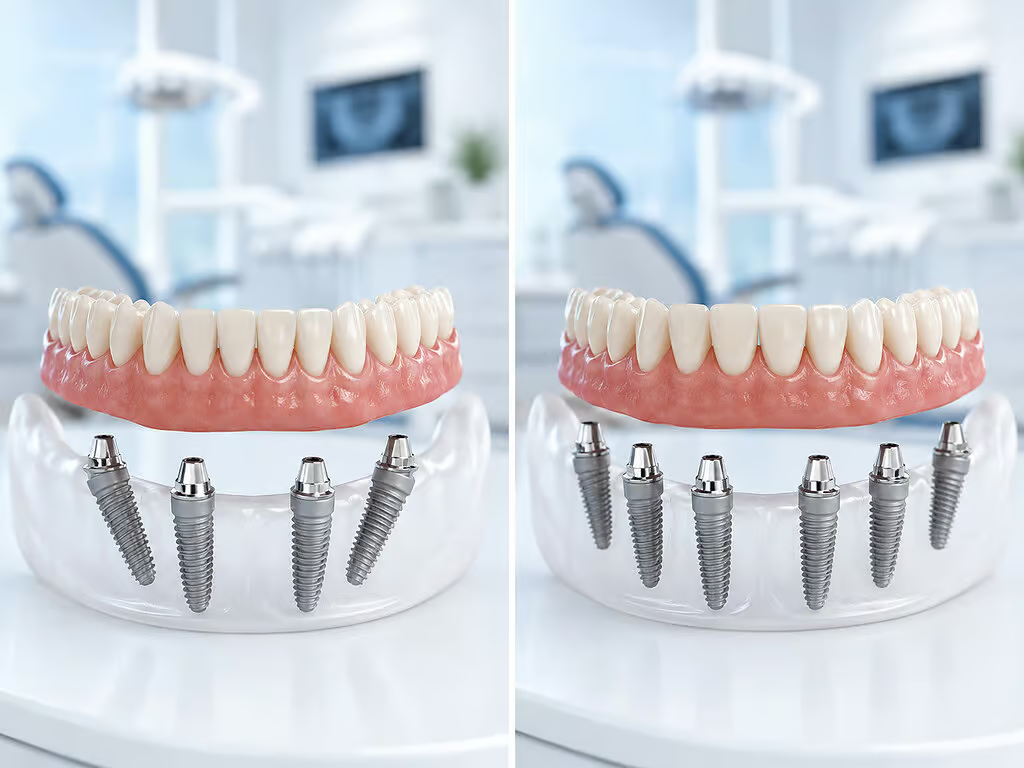
Impianti dentali All-on-4 utilizzano quattro impianti per supportare una riabilitazione fissa che sostituisce tutti i denti di un’arcata.
Due impianti vengono solitamente posizionati nella parte anteriore della mascella o della mandibola. I due impianti posteriori possono essere inclinati per sfruttare in modo più efficace l’osso disponibile e ridurre la lunghezza non supportata nella parte posteriore del ponte.
Questo approccio può essere utile quando l’osso è limitato in determinate aree posteriori. Il posizionamento inclinato può talvolta ridurre la necessità di una rigenerazione ossea più estesa, sebbene non possa eliminare procedure aggiuntive in tutti i casi.
L’All-on-4 può essere preso in considerazione per i pazienti che:
- hanno perso tutti i denti in un’arcata;
- hanno denti residui che non possono essere conservati;
- desiderano un’alternativa fissa a una protesi rimovibile;
- hanno una quantità di osso sufficiente a stabilizzare quattro impianti;
- hanno osso posteriore limitato;
- necessitano di una configurazione implantare meno estesa.
È necessaria una TAC CBCT per confermare se l’osso disponibile possa supportare questo tipo di struttura in sicurezza.
Come funziona l’All-on-6?
Impianti dentali All-on-6 utilizzano sei impianti distribuiti lungo la mascella o la mandibola per supportare il ponte completo.
I due impianti aggiuntivi creano più punti di supporto. Questo può consentire di distribuire le forze su un’area più ampia e offrire al team protesico più opzioni nella pianificazione del ponte.
L’All-on-6 può essere appropriato quando:
- è disponibile osso sufficiente per sei impianti;
- il paziente ha un morso forte;
- il ponte pianificato richiede un supporto più ampio;
- le posizioni degli impianti possono essere distribuite in modo efficace;
- la lunghezza o il design della riabilitazione beneficiano di un ancoraggio aggiuntivo;
- il team clinico desidera ridurre il carico applicato a ciascun impianto.
Gli impianti devono comunque essere inseriti in posizioni utili. Sei impianti posizionati male non sono preferibili a quattro impianti inseriti secondo un preciso piano chirurgico e protesico.
All-on-4 vs All-on-6: confronto
| Fattore | All-on-4 | All-on-6 |
| Impianti per arcata | Quattro | Sei |
| Punti di supporto | Meno numerosi | Due punti aggiuntivi |
| Distribuzione delle forze | Ripartite su quattro impianti | Distribuite su una base più ampia |
| Requisiti ossei | Può funzionare con una quantità di osso più limitata | Richiede osso idoneo in sei posizioni |
| Impianti posteriori | Spesso angolati | La posizione dipende dal piano individuale |
| Rigenerazione ossea | Può talvolta ridurre la necessità | Può essere necessaria per creare siti idonei |
| Chirurgia | Inserimento di quattro impianti | Posizionamento di sei impianti |
| Ponte provvisorio | Può essere possibile quando la stabilità è sufficiente | Può essere possibile quando la stabilità è sufficiente |
| Restauro finale | Ponte fisso a tutta arcata | Ponte fisso a tutta arcata |
| Più indicato per | Uso efficiente dell’osso disponibile | Casi che beneficiano di un supporto più ampio |
1. L’osso disponibile è il primo fattore decisivo
L’All-on-4 può essere indicato quando è disponibile osso sano sufficiente in quattro posizioni strategiche. L’All-on-6 richiede una quantità adeguata di osso distribuita su un’area più ampia per supportare due impianti aggiuntivi.
Una scansione CBCT aiuta il dentista a valutare altezza, densità e distribuzione dell’osso prima di decidere quale opzione offra il supporto più stabile.
2. Le arcate superiore e inferiore possono richiedere piani di trattamento diversi
Le arcate superiore e inferiore non hanno sempre la stessa struttura ossea.
L’osso della mascella superiore è spesso meno denso, in particolare nelle aree posteriori vicine ai seni mascellari. La mandibola può offrire un osso più denso, ma richiede anche un’attenta pianificazione in prossimità del nervo mandibolare.
Un paziente può quindi ricevere un All-on-4 in un’arcata e un All-on-6 nell’altra. Non esiste alcuna indicazione clinica che imponga alle riabilitazioni superiore e inferiore di utilizzare lo stesso numero di impianti.
Ogni arcata deve essere valutata separatamente in base alla sua anatomia, al supporto disponibile e alle forze previste durante la masticazione.
3. La forza del morso influisce sulla scelta
I pazienti con forze masticatorie elevate, bruxismo o serramento possono beneficiare della distribuzione più ampia delle forze offerta da sei impianti. Questo dipende dal fatto che l’arcata disponga di una quantità sufficiente di osso idoneo per il loro posizionamento.
Tuttavia, il numero di impianti non può correggere un’occlusione progettata in modo inadeguato. Una pianificazione accurata del ponte, controlli regolari e, quando raccomandato, un bite notturno protettivo restano importanti per entrambi i trattamenti.
4. Anche il design del ponte è altrettanto importante
All-on-4 e All-on-6 descrivono il numero di impianti, ma il paziente utilizza il ponte, non solo gli impianti.
Il risultato finale dipende anche da:
- il materiale utilizzato per il ponte;
- la lunghezza della riabilitazione;
- la distanza tra le connessioni implantari;
- l'area non supportata dietro l'ultimo impianto;
- l'adattamento passivo;
- la posizione dei denti;
- i contatti occlusali;
- l'accesso per l'igiene.
L'implantologo e l'odontotecnico devono quindi pianificare il caso insieme. Le posizioni degli impianti devono supportare la riabilitazione prevista, anziché essere selezionate in modo indipendente e poi affidate al laboratorio.
5. Un numero maggiore di impianti non significa automaticamente un risultato migliore
L’All-on-6 può offrire un supporto aggiuntivo, ma questo non lo rende il trattamento corretto per ogni paziente.
Posizionare sei impianti può essere superfluo quando quattro impianti sono già in grado di sostenere correttamente la riabilitazione prevista. Gli impianti aggiuntivi richiedono inoltre osso adeguato e posizioni anatomiche sicure.
La qualità del risultato dipende da diversi fattori oltre al numero di impianti:
- selezione del paziente;
- stabilità implantare;
- precisione chirurgica;
- adattamento protesico;
- igiene orale;
- fumo;
- controllo della malattia gengivale;
- appuntamenti di mantenimento.
6. In che modo la perdita ossea influenza la scelta
Un paziente con perdita ossea può pensare che All-on-6 offra maggiore sicurezza. In realtà, una riduzione dell'osso può rendere difficile posizionare correttamente sei impianti.
All-on-4 può talvolta utilizzare impianti posteriori angolati per evitare le aree con osso insufficiente. Questo può ridurre la necessità di un'estesa rigenerazione ossea o rialzo del seno mascellare in casi selezionati.
Tuttavia, una perdita ossea grave o mal distribuita può comunque richiedere una procedura aggiuntiva. In alternativa, un piano All-on-X personalizzato può prevedere un numero o una posizione diversa degli impianti.
La soluzione corretta dipende da dove è ancora presente l'osso, non semplicemente da quanto osso è andato perso nel complesso.
Il recupero è diverso?
Il processo generale di recupero è simile, poiché entrambe le procedure prevedono un intervento di implantologia e un restauro provvisorio dell'intera arcata.
L’All-on-6 include due siti implantari aggiuntivi, ma il recupero è influenzato da fattori che vanno oltre il numero di impianti. Le estrazioni, le procedure ossee, lo stato di salute generale del paziente e la complessità dell’intervento possono avere un impatto maggiore.
Durante la fase iniziale di guarigione, ai pazienti vengono normalmente fornite istruzioni riguardanti:
- farmaci;
- igiene orale;
- alimenti adatti;
- attività fisica;
- pulizia intorno al ponte;
- segnali che richiedono di contattare la clinica.
Seguire queste istruzioni è importante perché i denti provvisori devono rimanere protetti mentre gli impianti si integrano con l’osso.
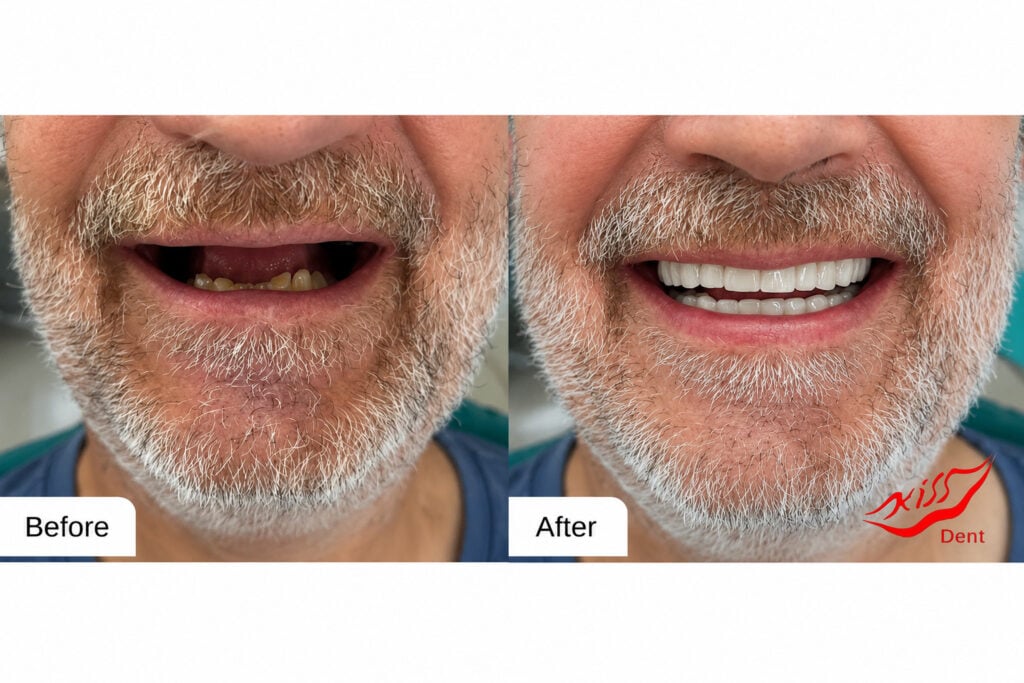
Come KissDent sceglie tra All-on-4 e All-on-6
KissDent non seleziona il trattamento basandosi soltanto sul numero di impianti. Il team valuta la mascella e la mandibola attraverso l’esame clinico, l’imaging CBCT e la pianificazione protesica digitale.
La valutazione prende in considerazione:
- volume e densità ossea;
- posizioni implantari sicure;
- numero e condizione dei denti rimanenti;
- forza del morso;
- spazio disponibile per la riabilitazione;
- necessità di estrazioni;
- possibili procedure di rigenerazione ossea;
- progettazione del ponte definitivo;
- lo stato di salute generale del paziente e la sua capacità di mantenere una corretta igiene e manutenzione.
Il piano chirurgico è coordinato con il team di KissDent dedicato a laboratorio CAD/CAM interno. Questo consente di pianificare il posizionamento degli impianti, i denti provvisori e il ponte definitivo come parti di un unico trattamento.
La riabilitazione definitiva può essere progettata e realizzata in sede, consentendo al team clinico e tecnico di verificarne direttamente adattamento, occlusione ed estetica.
All-on-4 o All-on-6: quale soluzione è migliore?
Nessuno dei due trattamenti è universalmente migliore.
All-on-4 può offrire una riabilitazione fissa efficace quando quattro impianti ben posizionati forniscono il supporto necessario. Può essere utile anche quando l’osso nelle aree posteriori è limitato.
All-on-6 può essere preferibile quando la mandibola o il mascellare offrono siti implantari adeguati e la riabilitazione beneficia di un supporto più ampio. I due impianti aggiuntivi possono essere particolarmente utili nei casi caratterizzati da forze più elevate o da specifiche esigenze protesiche.
Il trattamento migliore è quello scelto dopo aver valutato l’osso e pianificato i denti definitivi, non l’opzione con il numero più alto nel nome.
Trova la soluzione full-arch più adatta da KissDent 🦷✨
Non sai se hai bisogno di impianti dentali All-on-4 o All-on-6? Invia a KissDent la tua radiografia panoramica o l’eventuale CBCT disponibile per una valutazione iniziale.
Il team può esaminare il tuo caso, spiegarti le possibili opzioni e preparare un calendario preliminare del trattamento prima del tuo viaggio a Tirana.
📲 WhatsApp: +355 69 206 2408
📧 Email: info@kissdent.info