Dental Veneers in Albania | KissDent Tirana
We place dental veneers in Tirana to permanently correct discolouration, chips, gaps, and uneven teeth — with the material, design process, and fabrication matched to what each patient actually needs.
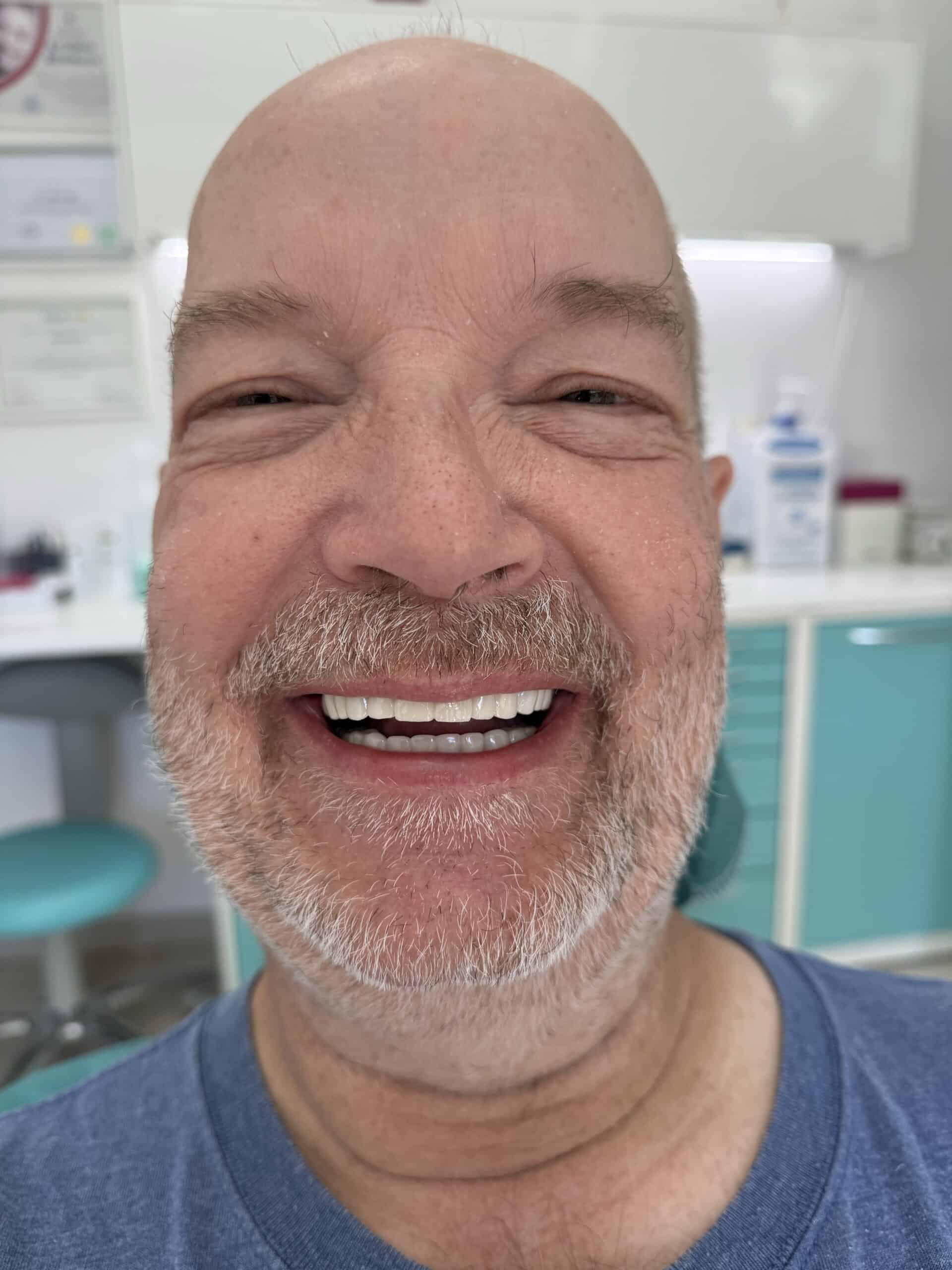
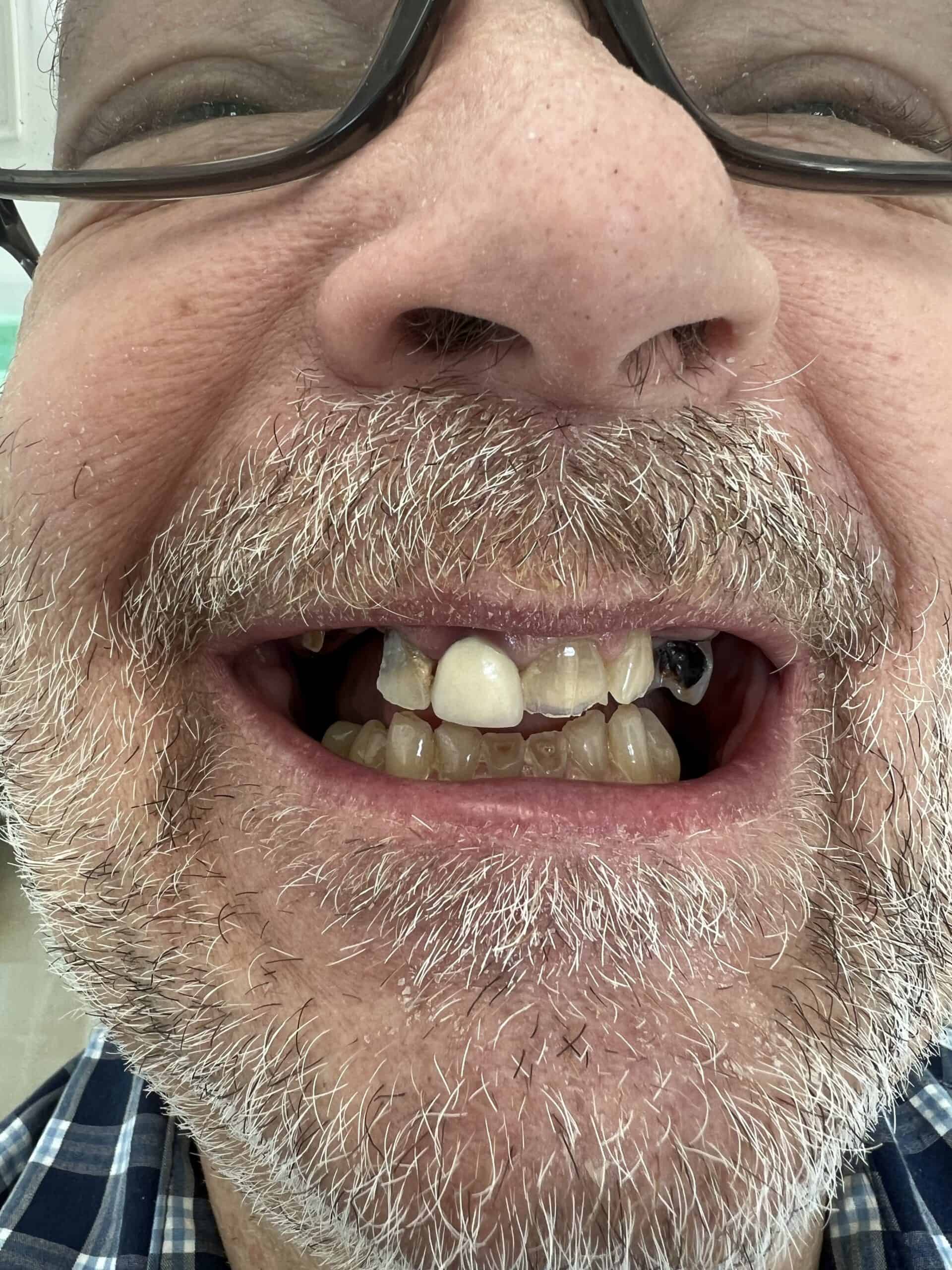
Our Patients’ Testimonials | Before and After
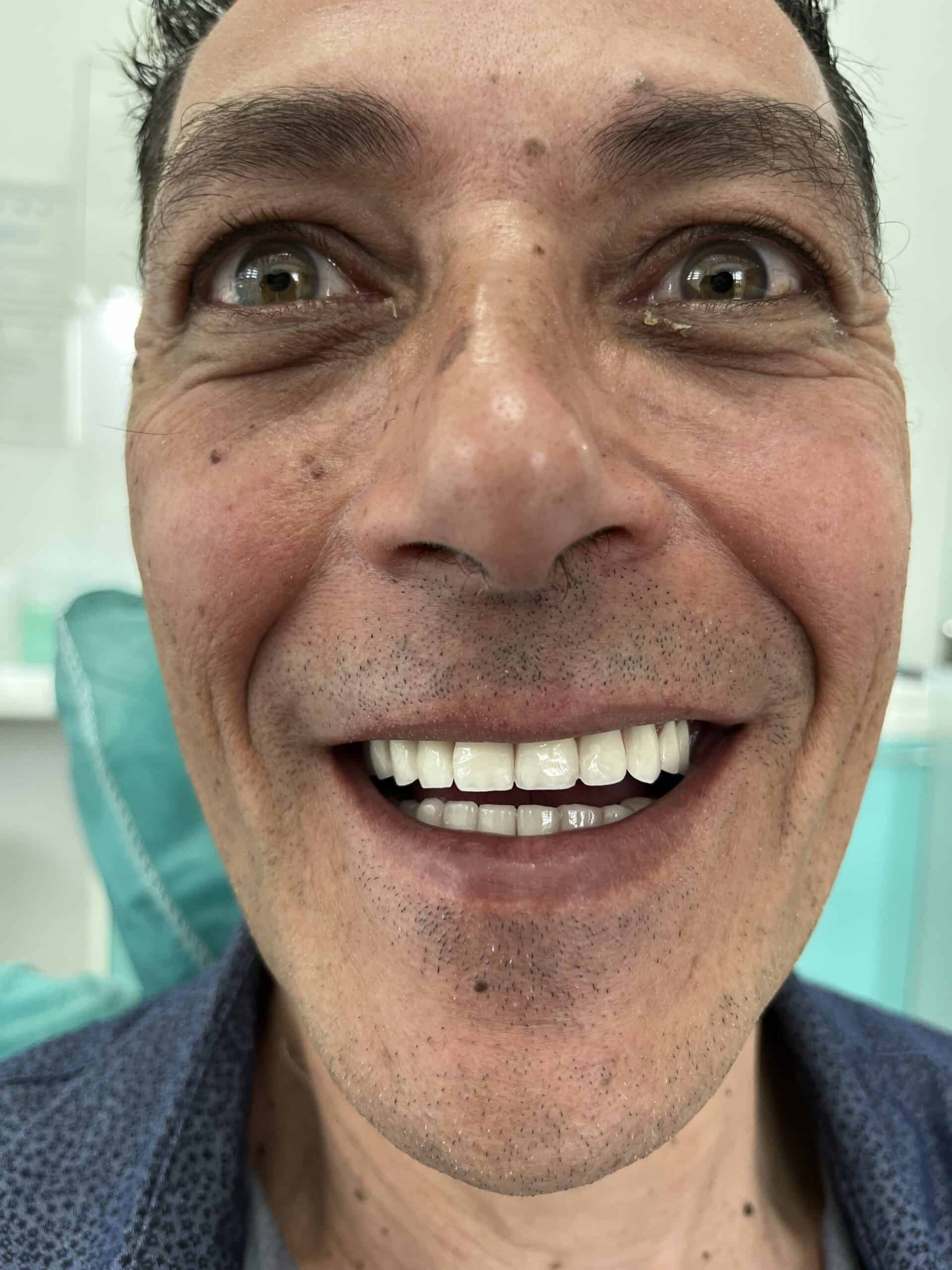
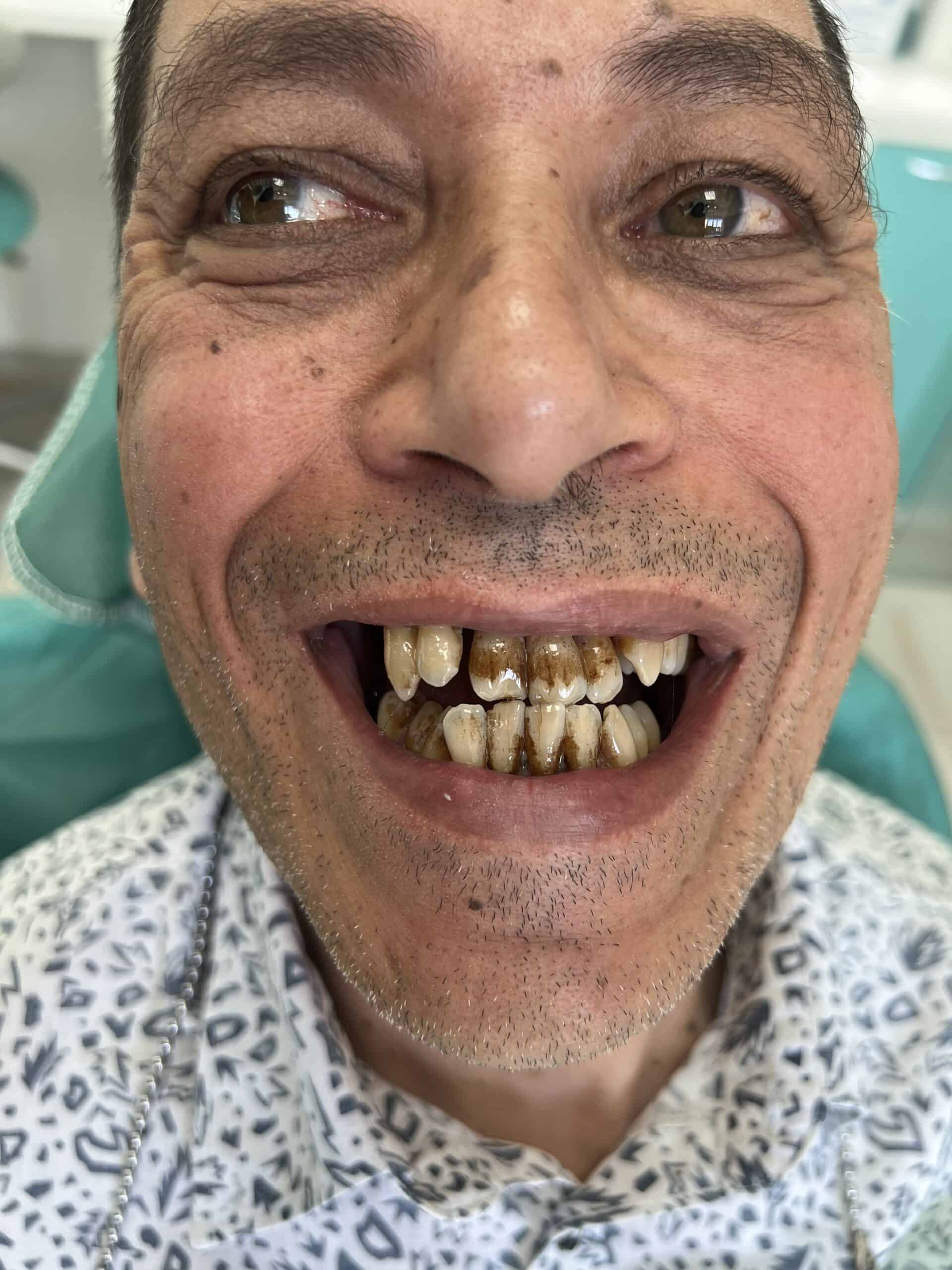
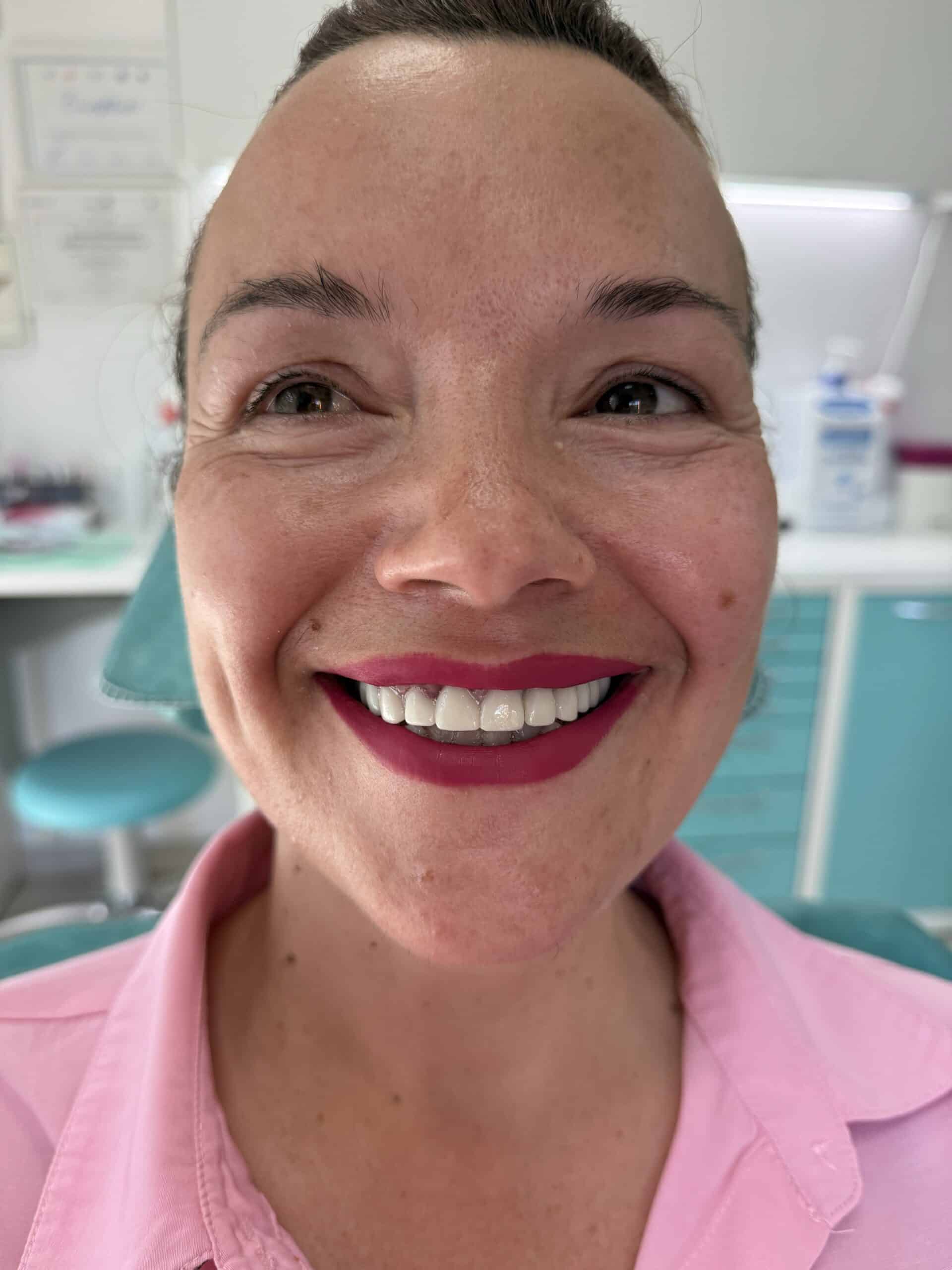
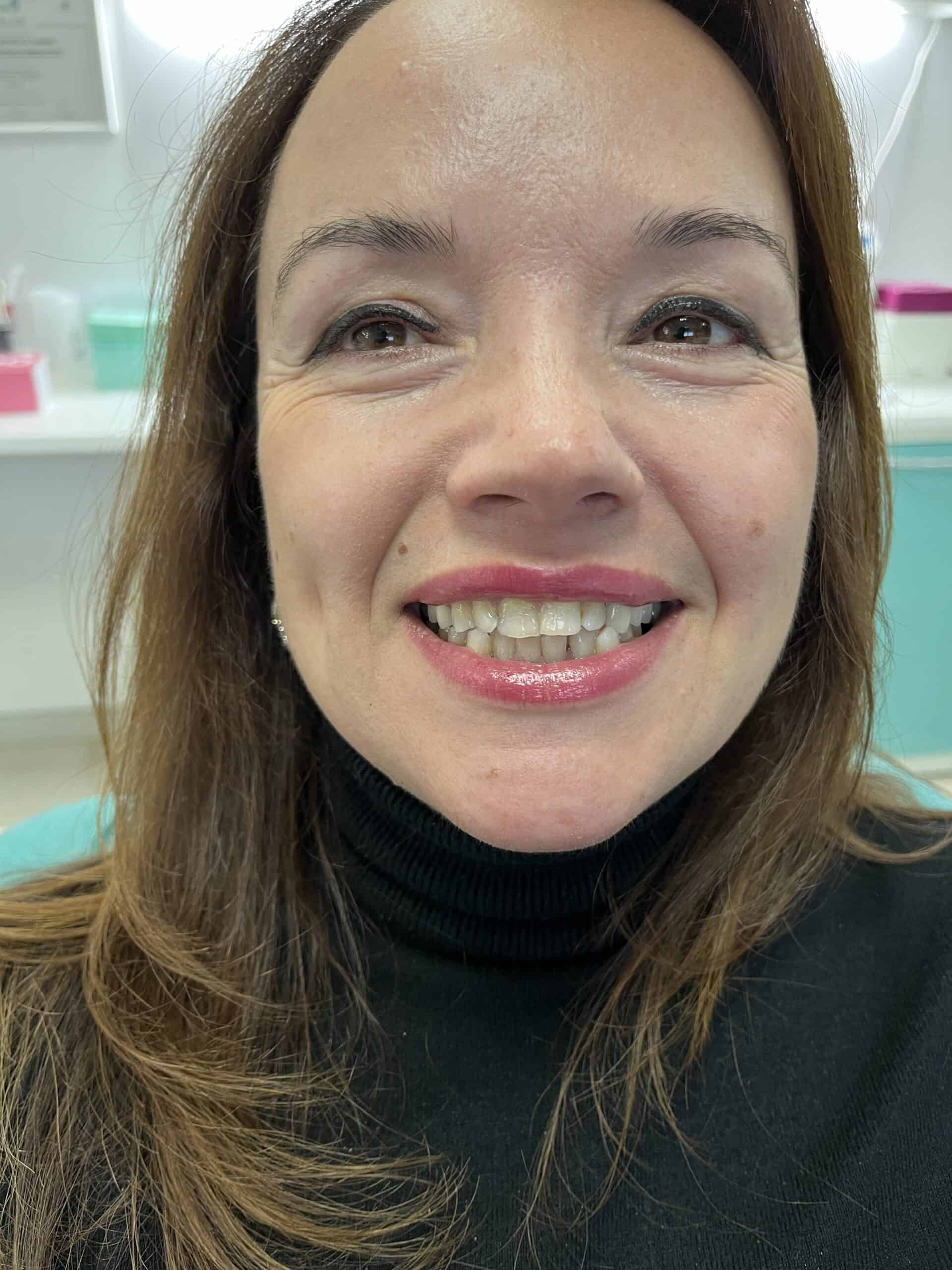
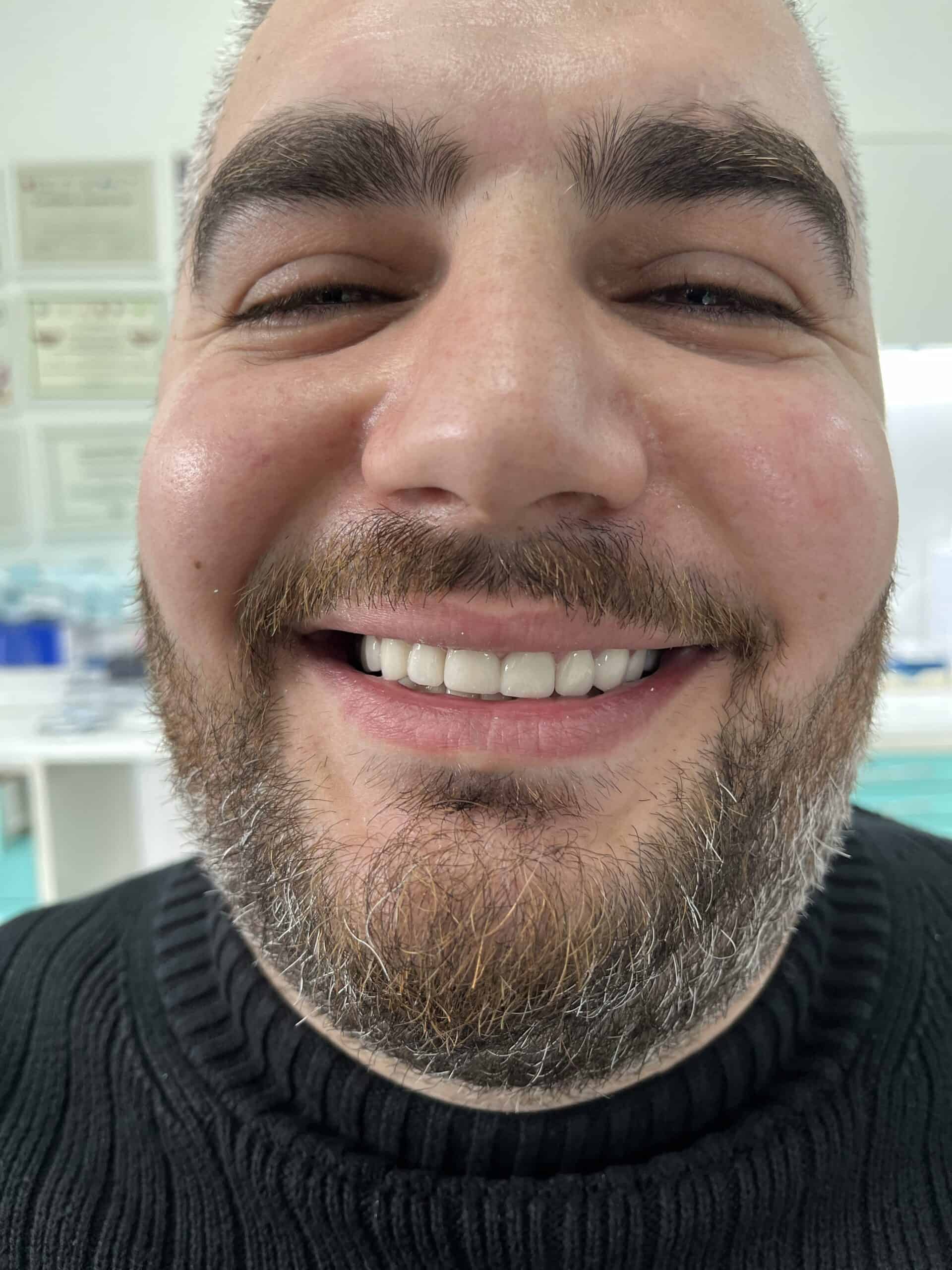
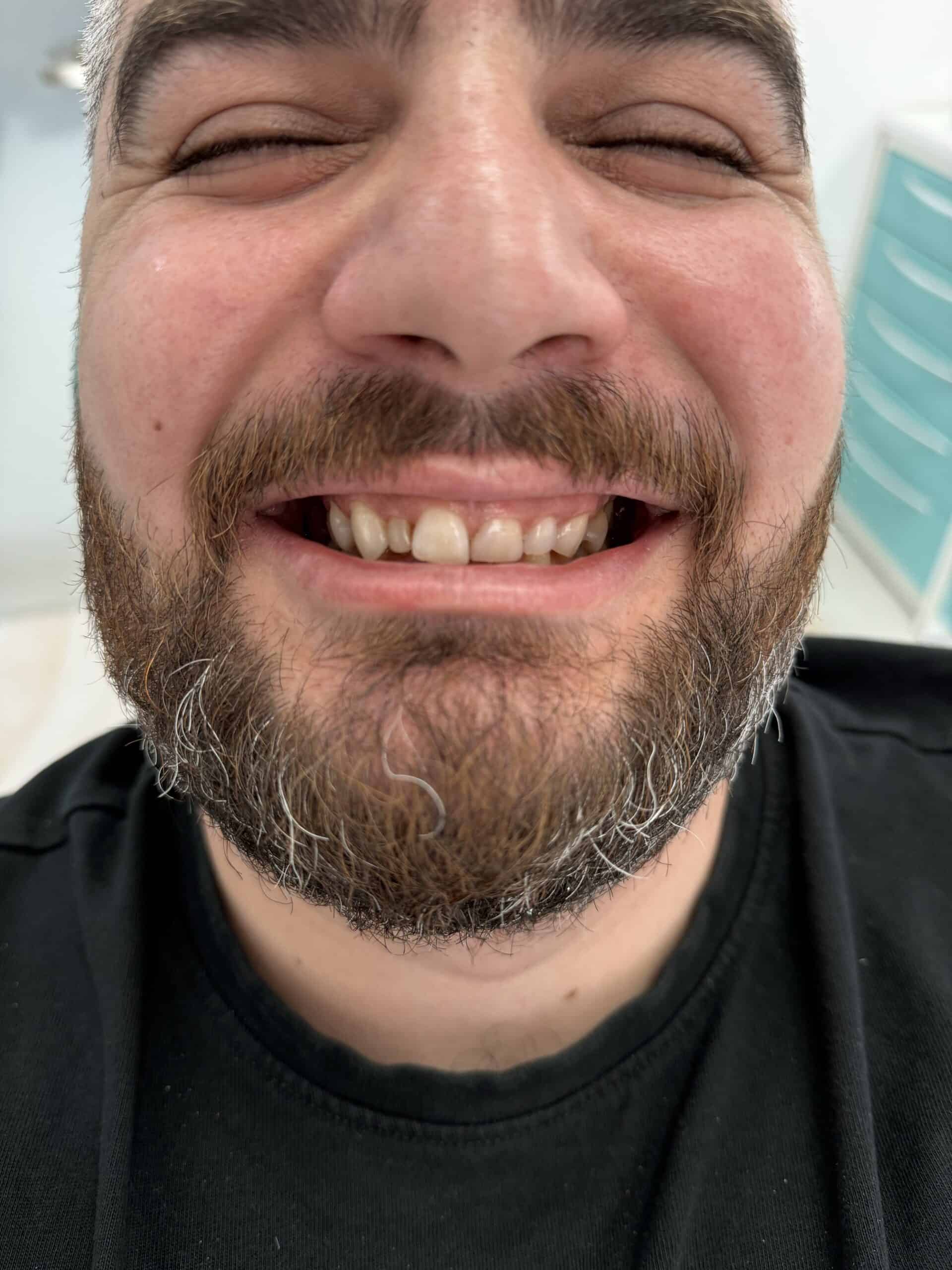
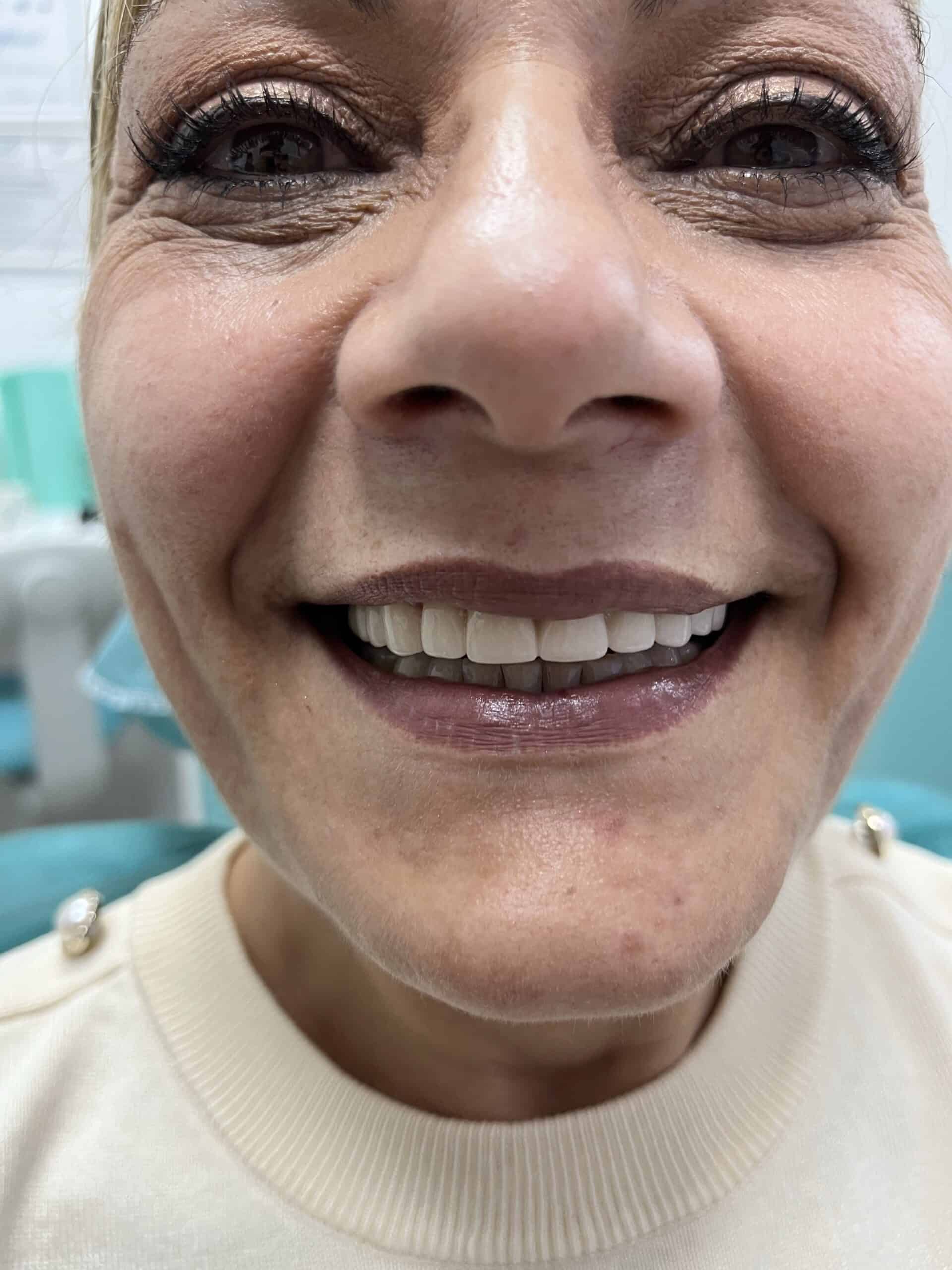
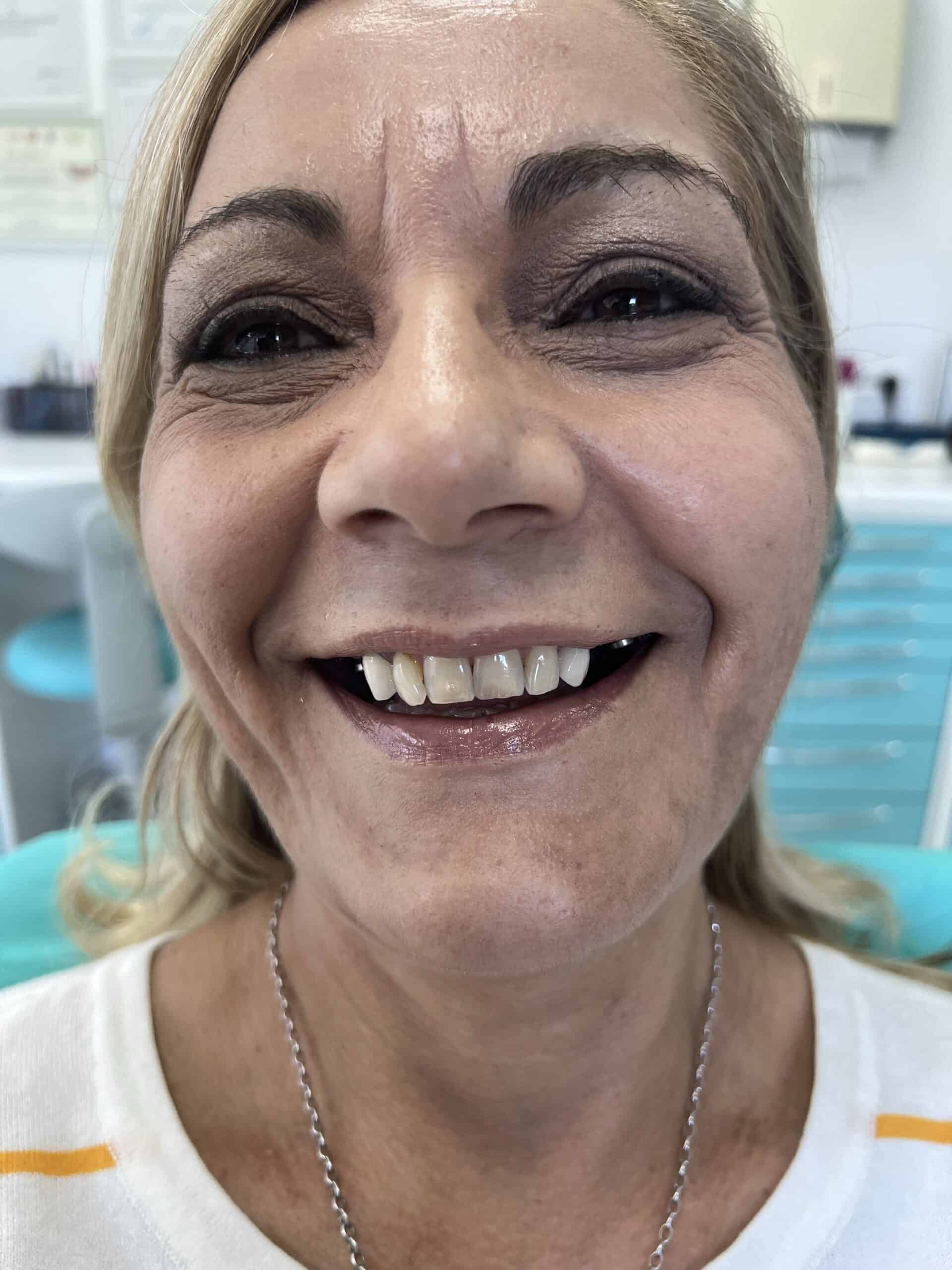
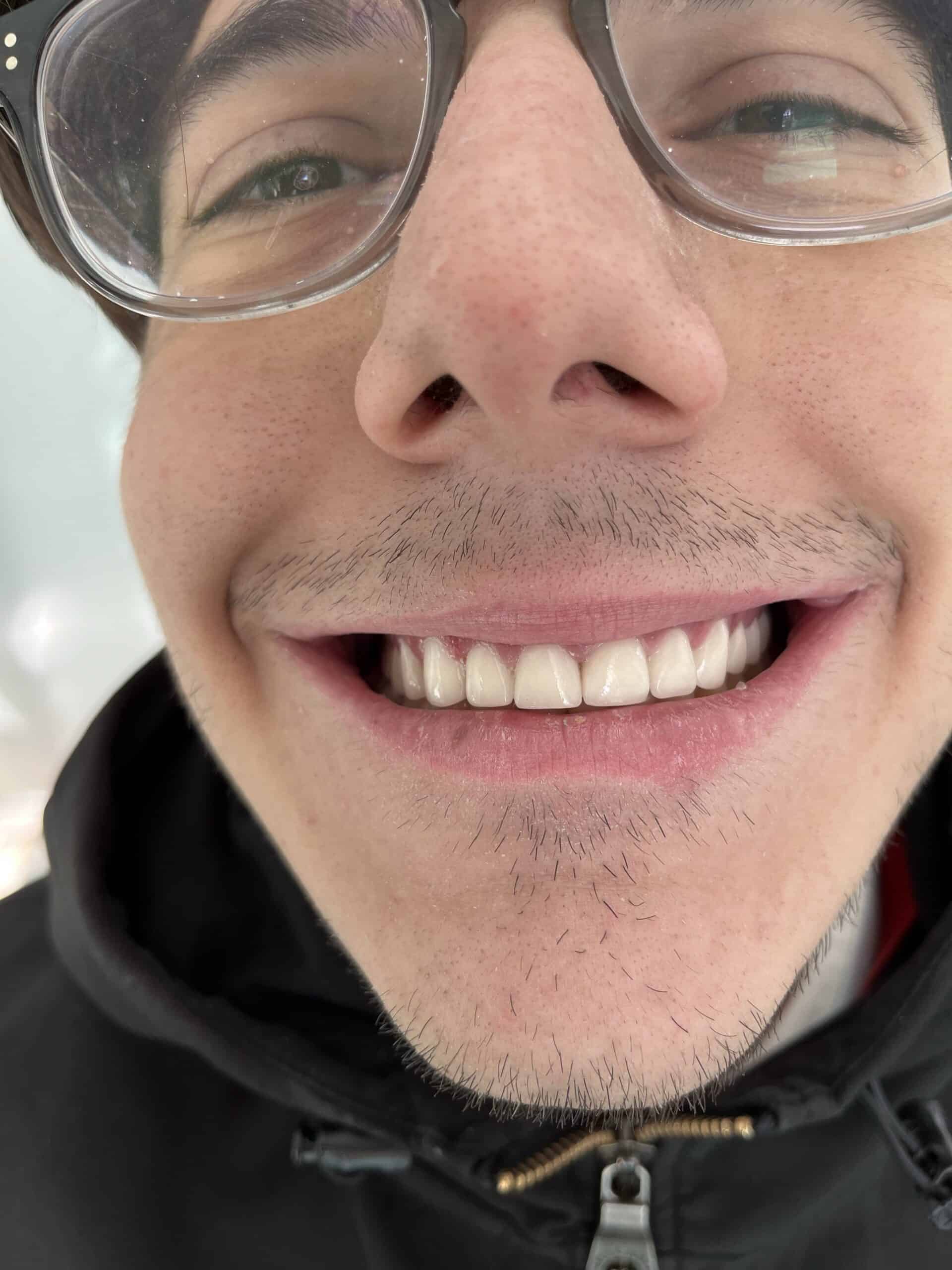
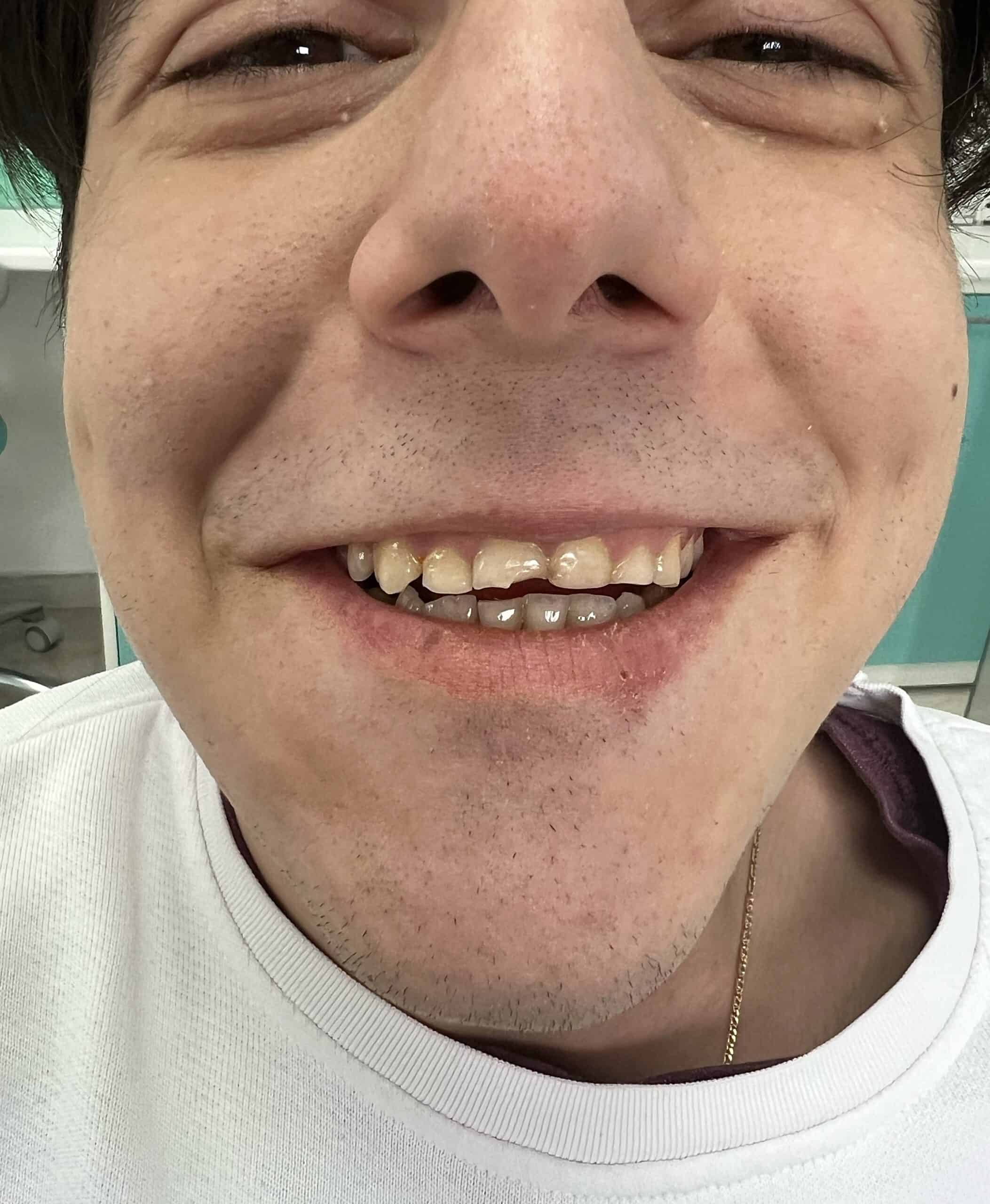
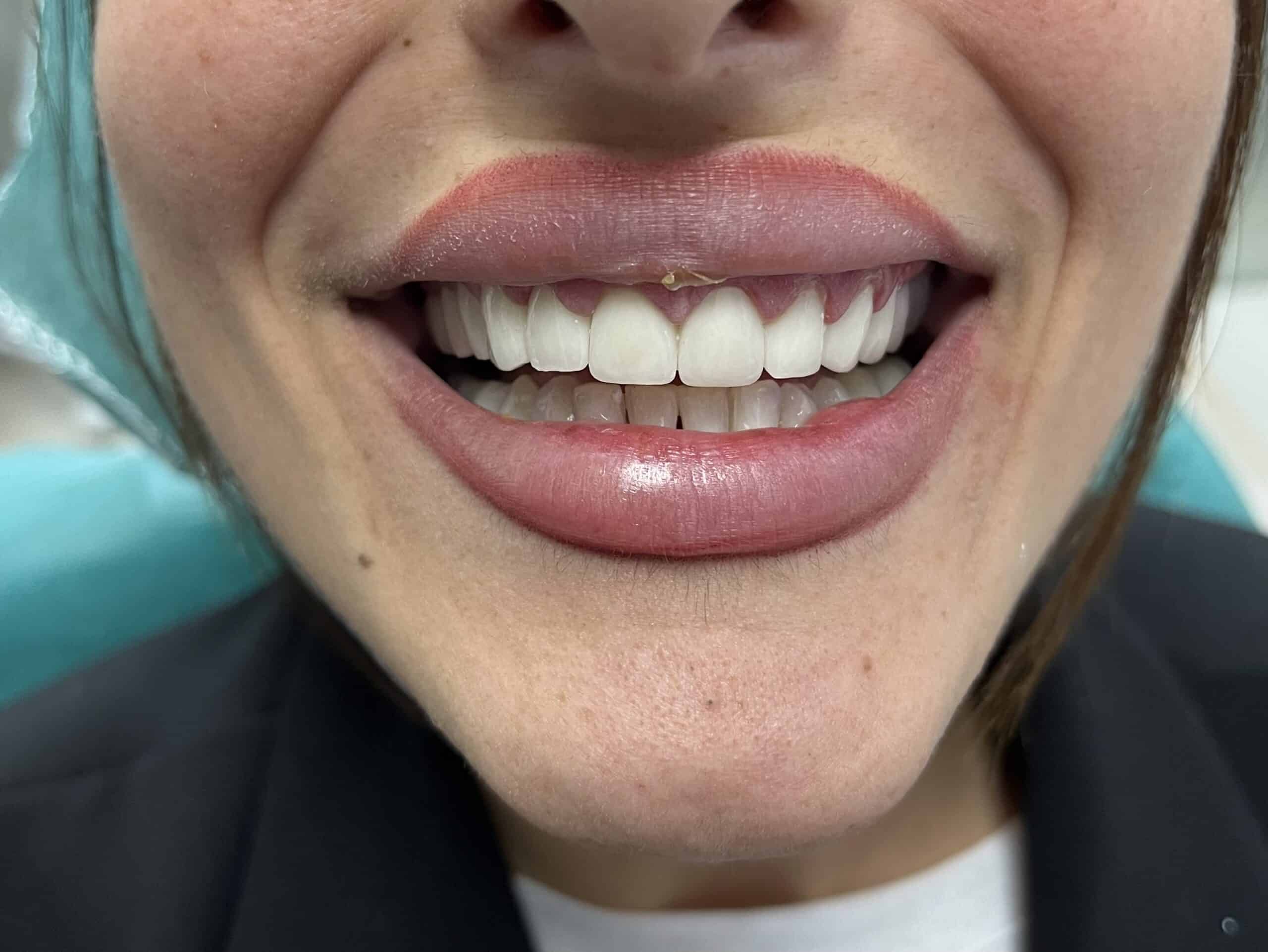
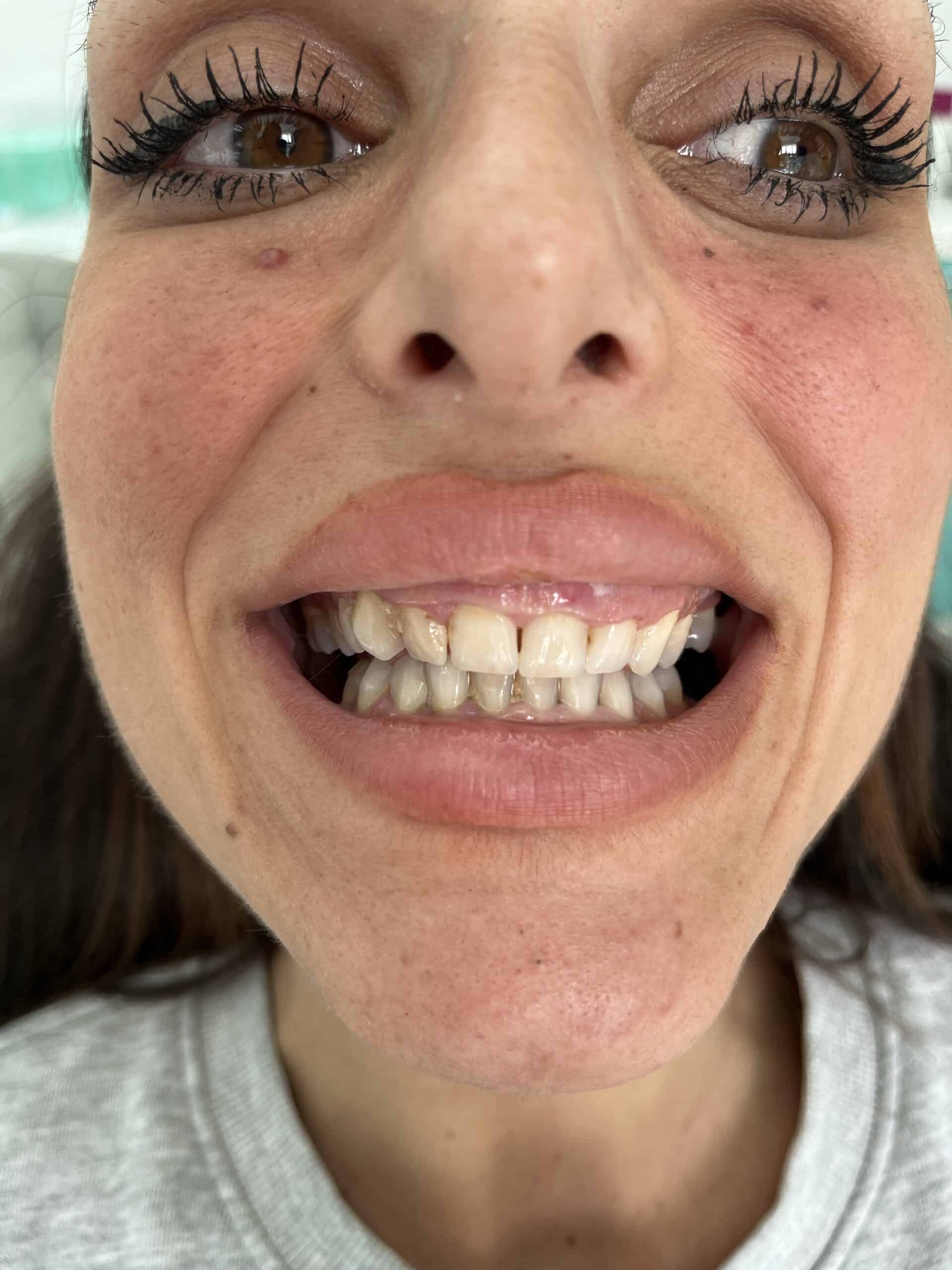
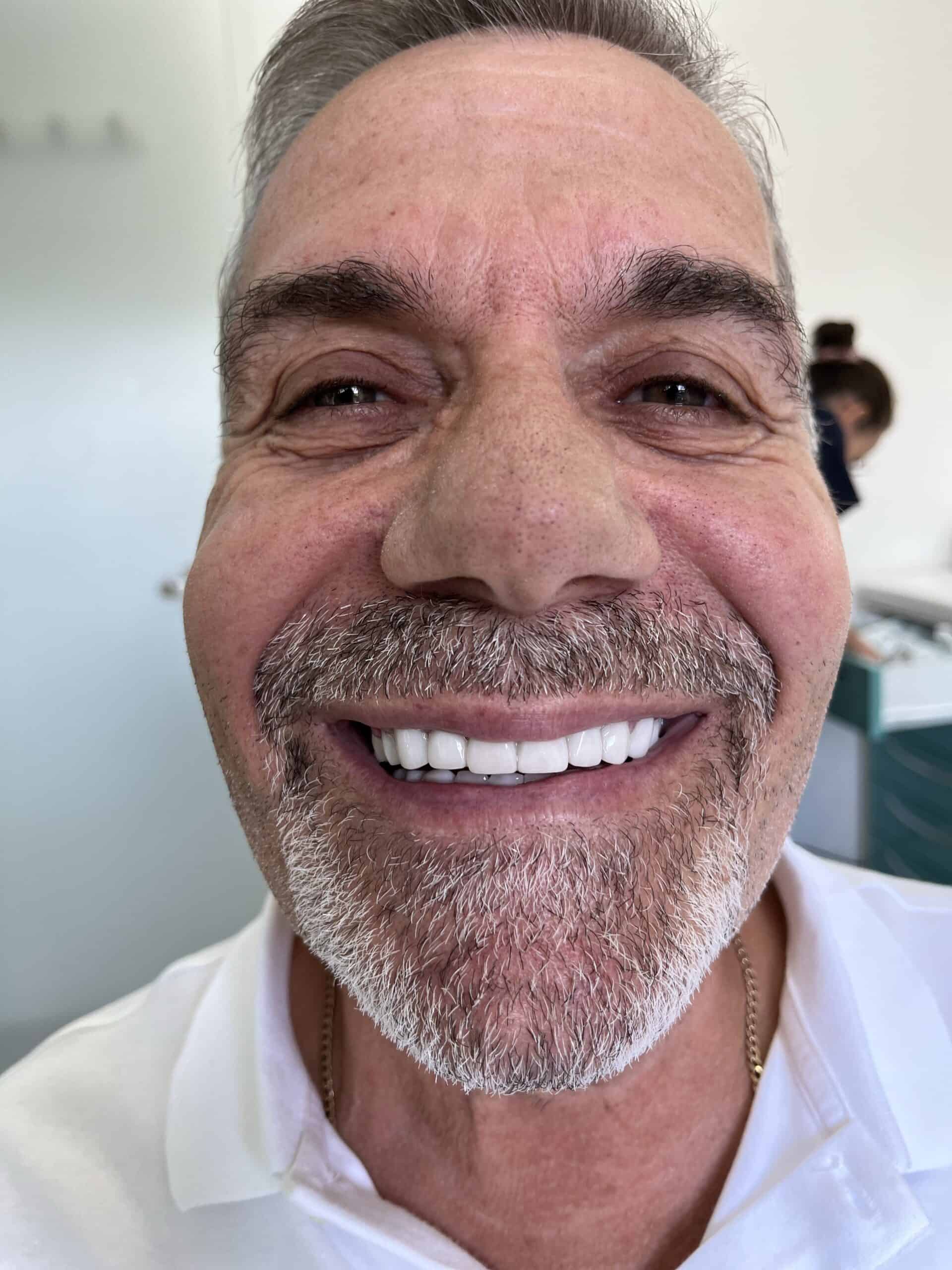
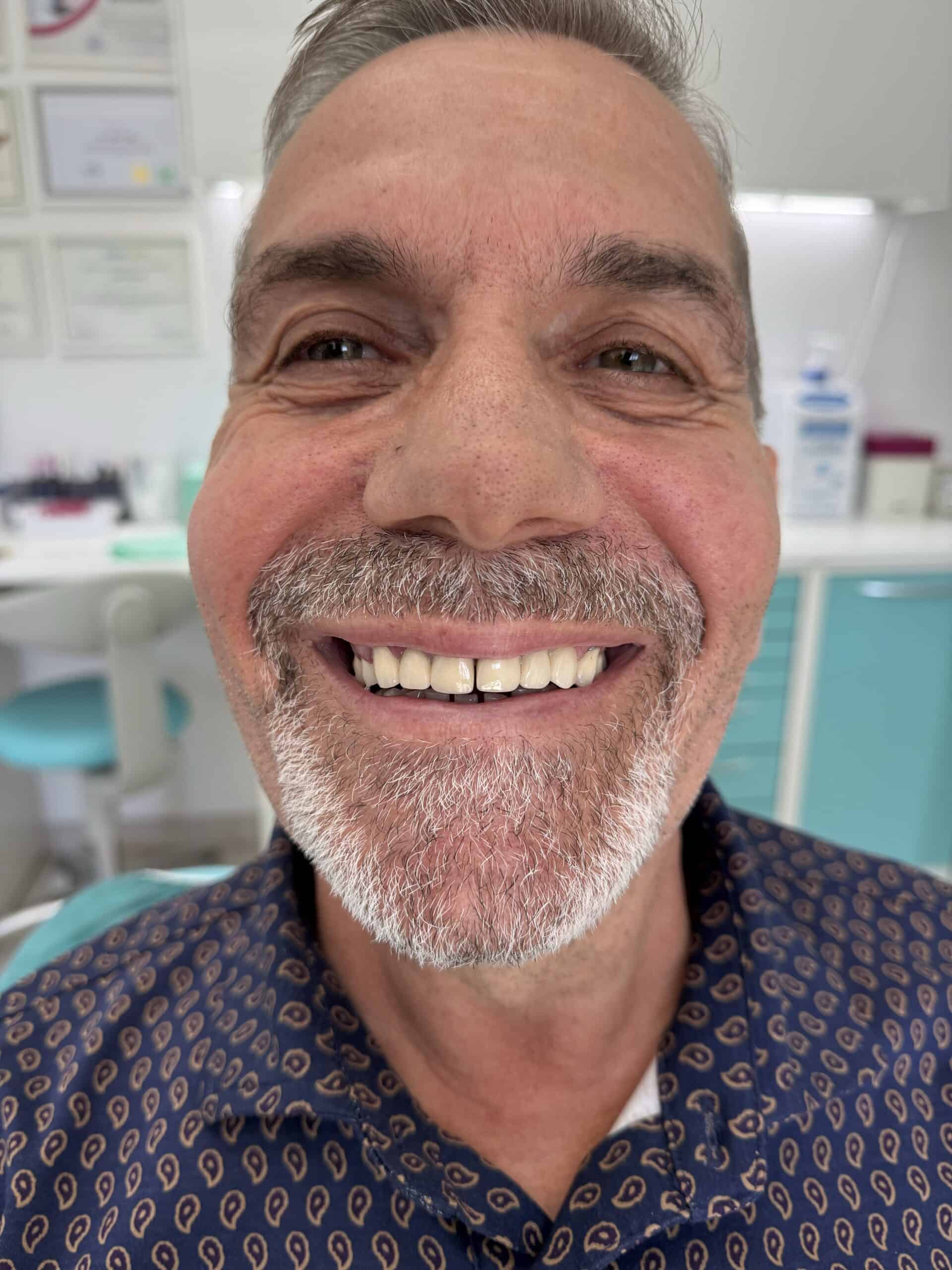
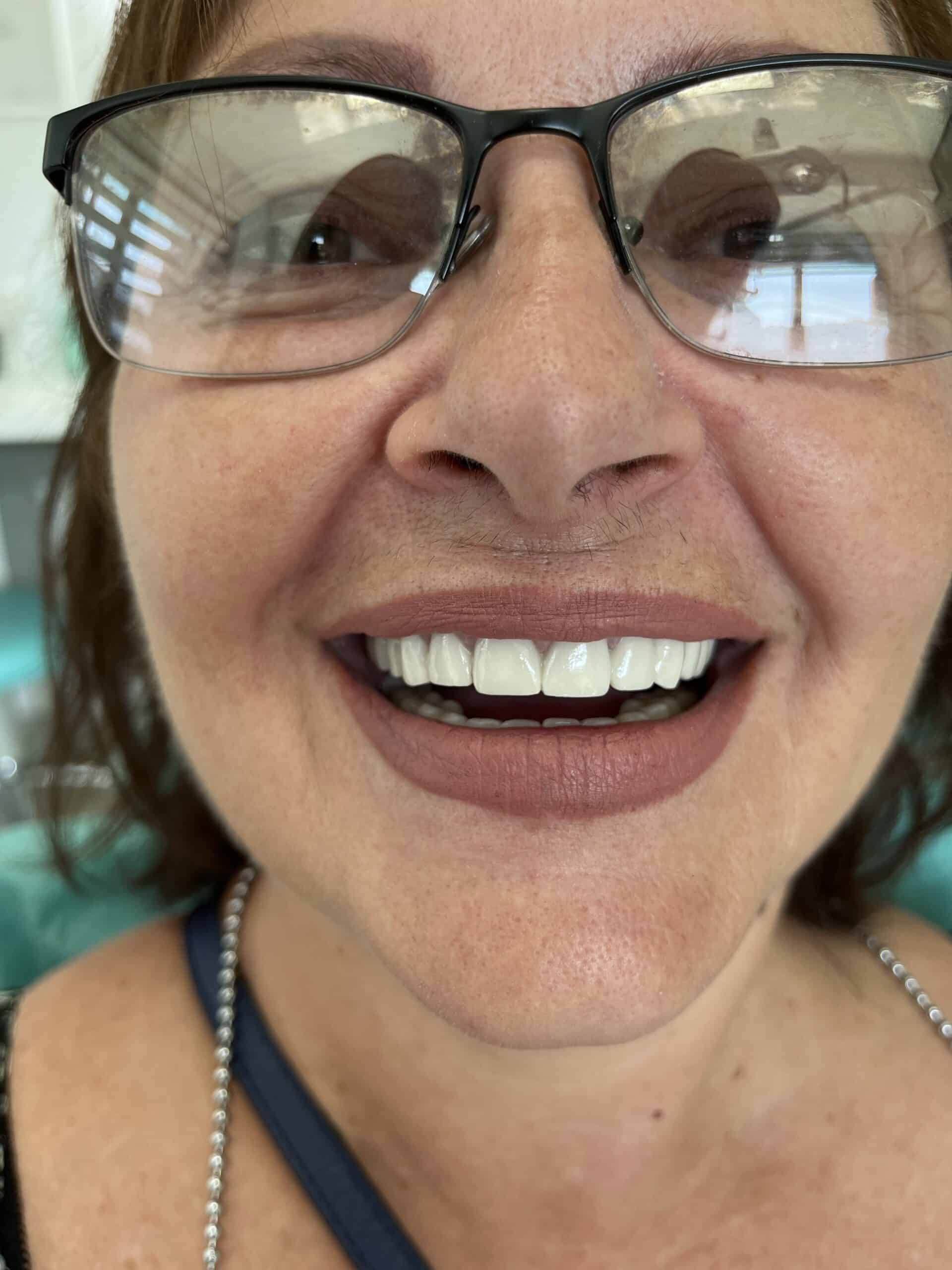
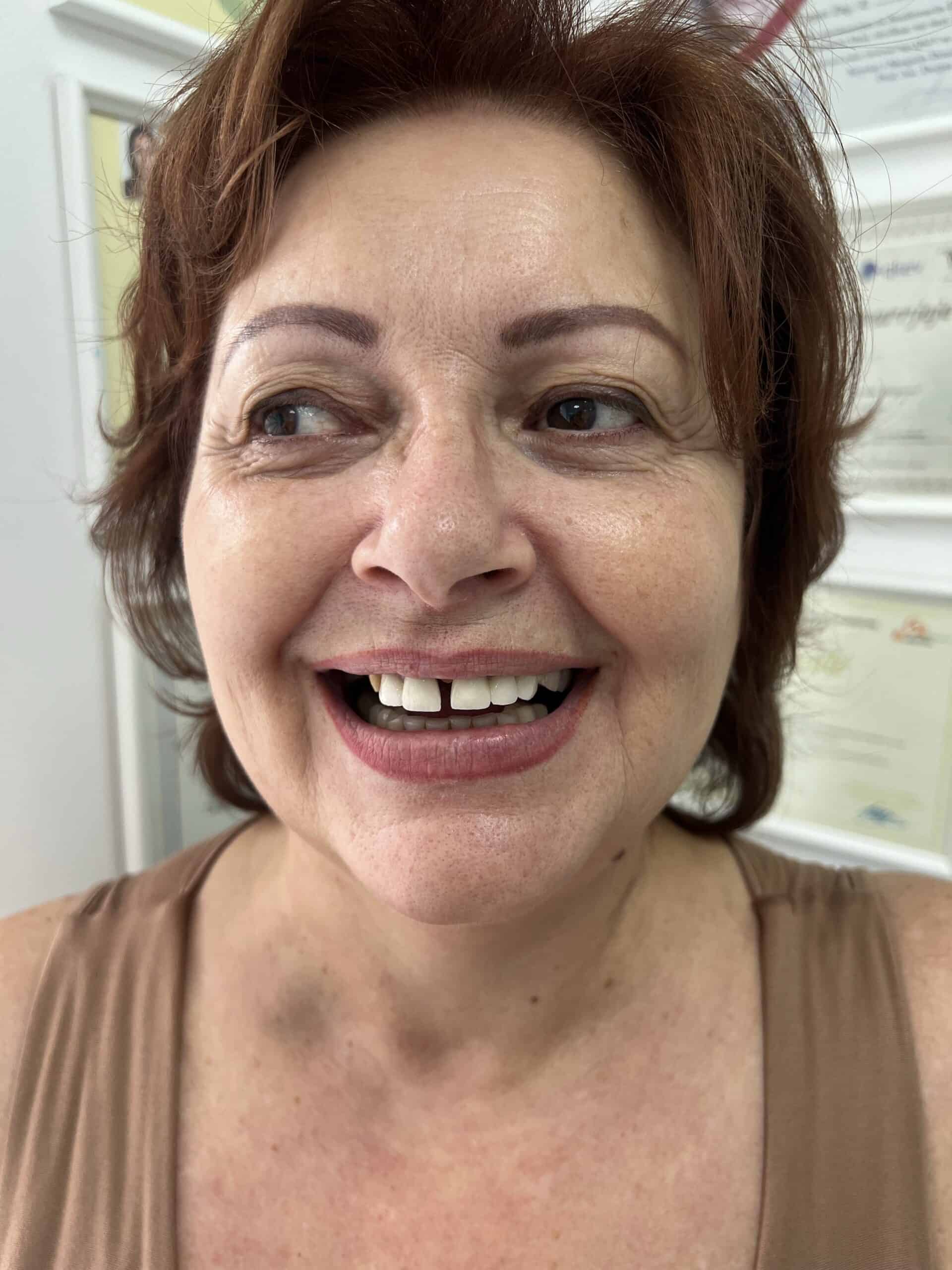
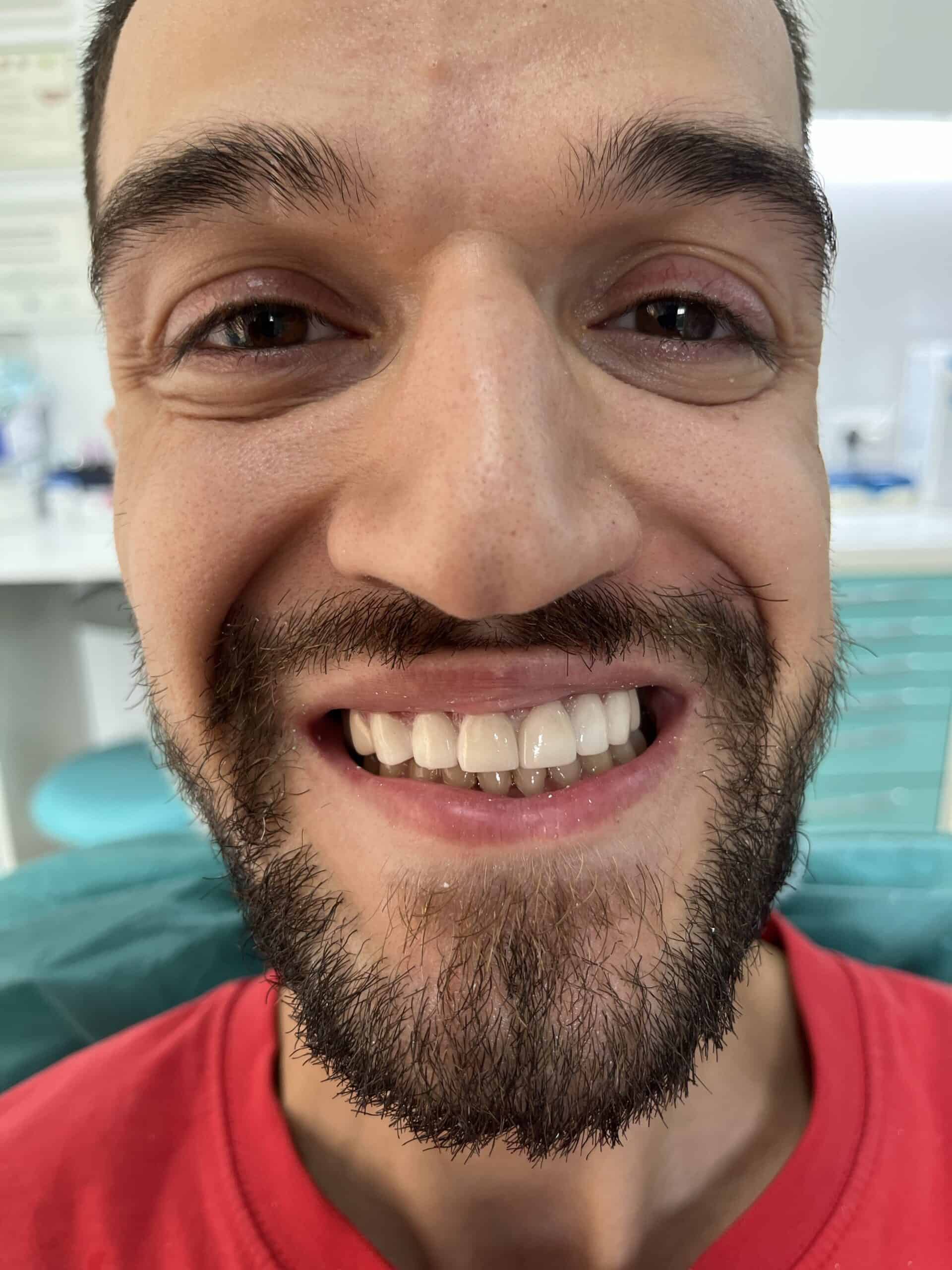
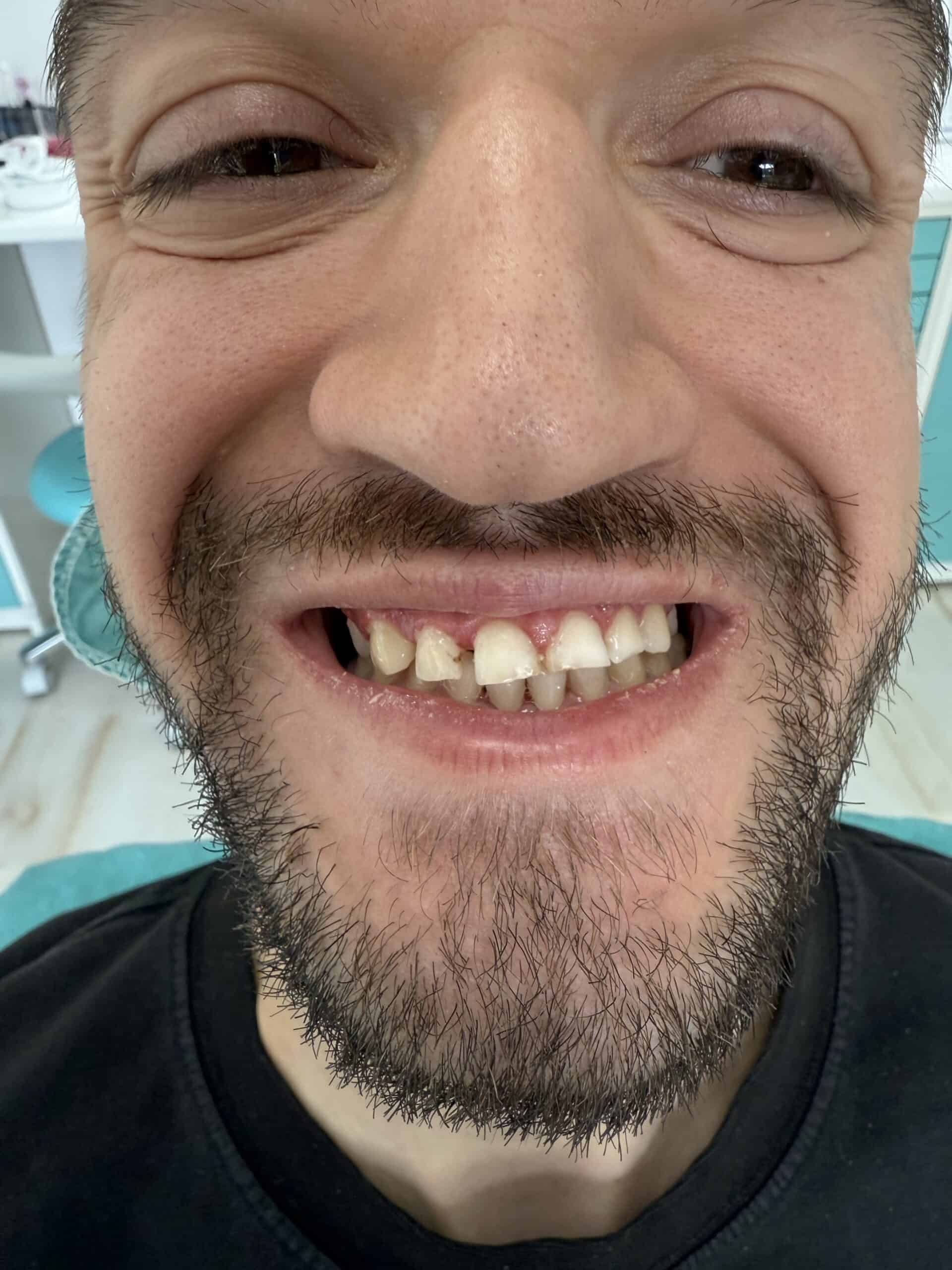
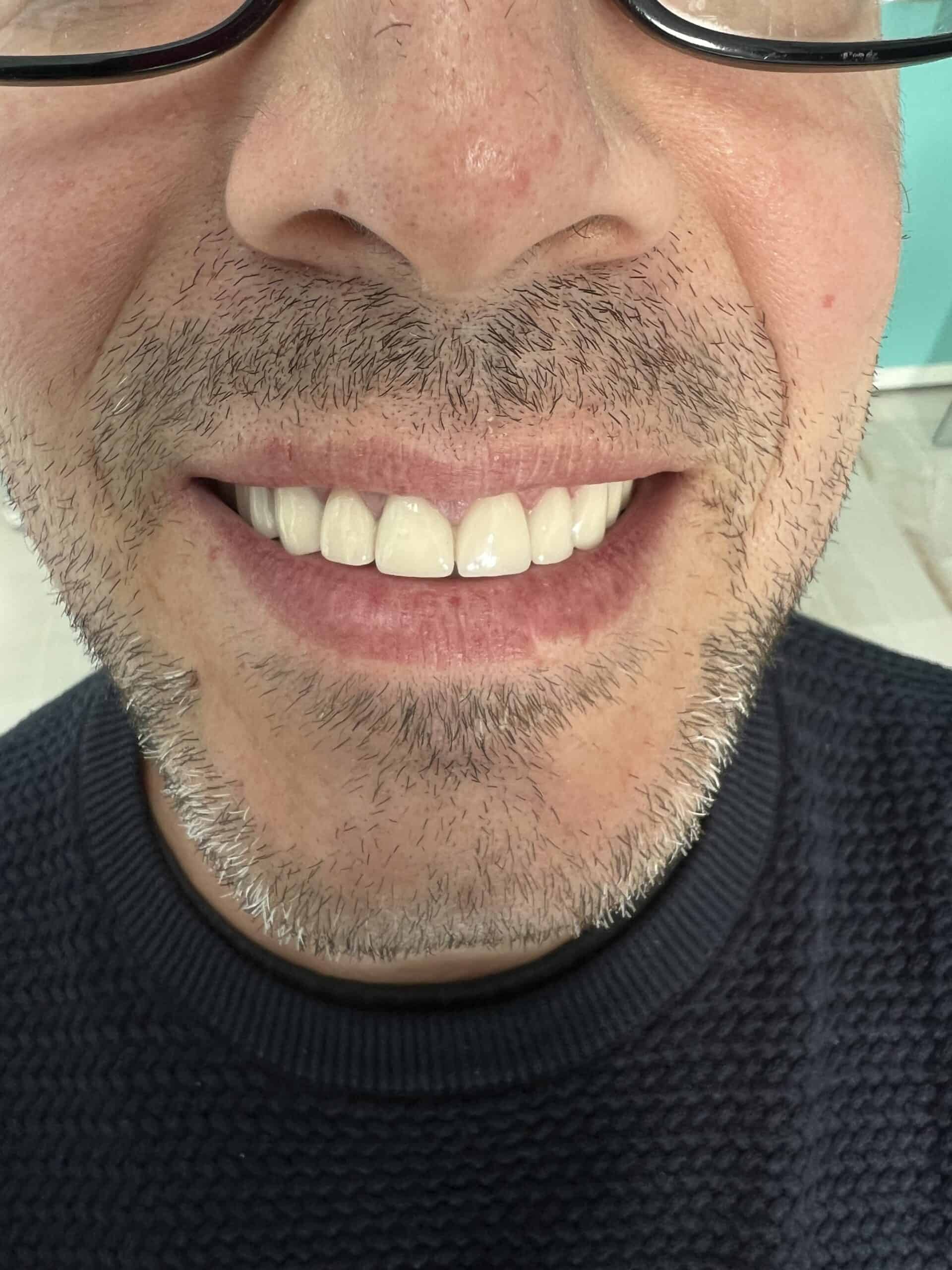
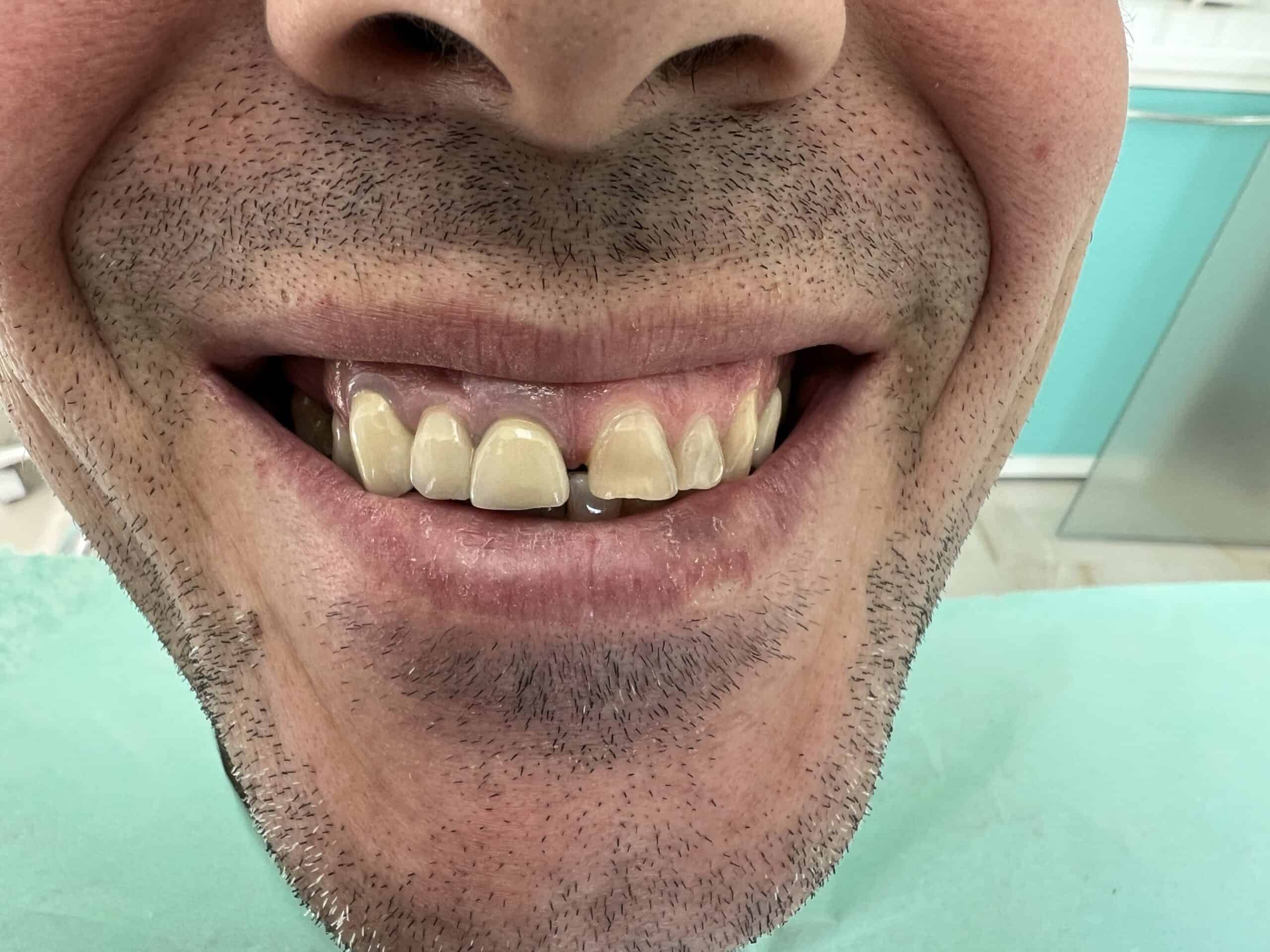
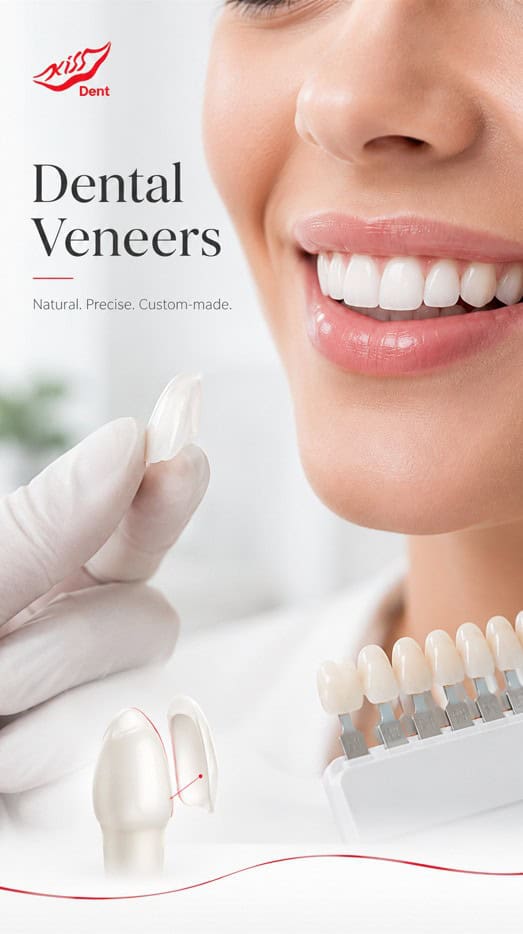
Dental Veneers in Albania — The Right Material, The Right Result
A veneer done well is invisible — not because it is hidden, but because it looks exactly like a tooth that was simply always there. Getting to that result starts with an honest clinical assessment: which type of veneer is right for this patient, this tooth, and this goal.
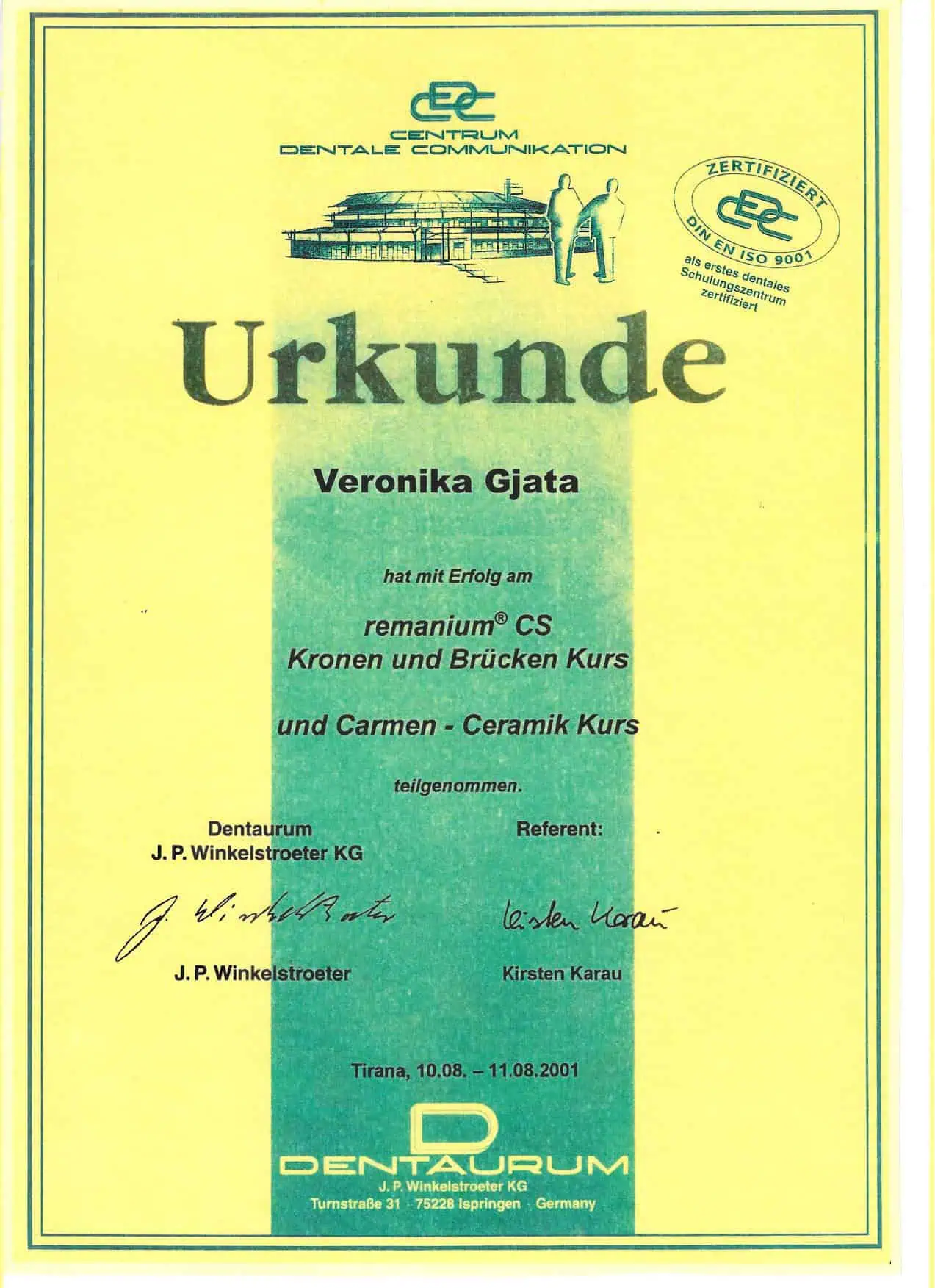
At KissDent in Tirana, under the clinical direction of Dr. Veronika Gjata, we offer the full range of veneer options — composite, E-Max porcelain, and zirconia where indicated — fabricated in our own in-house CAD/CAM laboratory, which has operated since 2005 as the first of its kind in Albania. We do not apply one material to every case. We match the treatment to the clinical situation and explain the reasoning clearly.
What Are Dental Veneers?
A dental veneer is a thin shell bonded to the front surface of a tooth to permanently correct its colour, shape, length, or surface. The shell is typically 0.3 to 0.7mm thick — less than a millimetre — and leaves most of the underlying tooth structure intact.
Veneers are the right treatment when a tooth is structurally sound but has a cosmetic problem that other approaches cannot resolve:
- Permanent discolouration — tetracycline staining from childhood antibiotics, fluorosis, or trauma-related darkening that whitening cannot reach
- Chips and fractures on the visible surface of front teeth
- Gaps between teeth that a patient wants closed without orthodontic treatment
- Worn or short teeth — edges eroded by grinding or acid that make the smile look older
- Uneven or irregular shape — a tooth that is too narrow, too short, or slightly rotated relative to its neighbours
- Complete smile redesign — multiple front teeth treated together as a planned aesthetic transformation
Veneers are not appropriate for teeth that are structurally compromised — a crown is the right choice there. And they will not correct significant misalignment, which requires orthodontics first. At your consultation, Dr. Gjata’s team will tell you honestly whether veneers are the right route or whether another approach serves you better.
What to expect
1–3 hours per session
Save up to 60% on dental care
Lifetime guarantee
Full dental tourism support
Certified surgeons
Aftercare and warranty included
The smile you want, now closer to you!
Transform your smile with our all-inclusive dental packages, which include treatment, airport transfer and accommodation.

Dental Technology in Albania
Patients Treated
Years of Experience
All-Inclusive Treatments
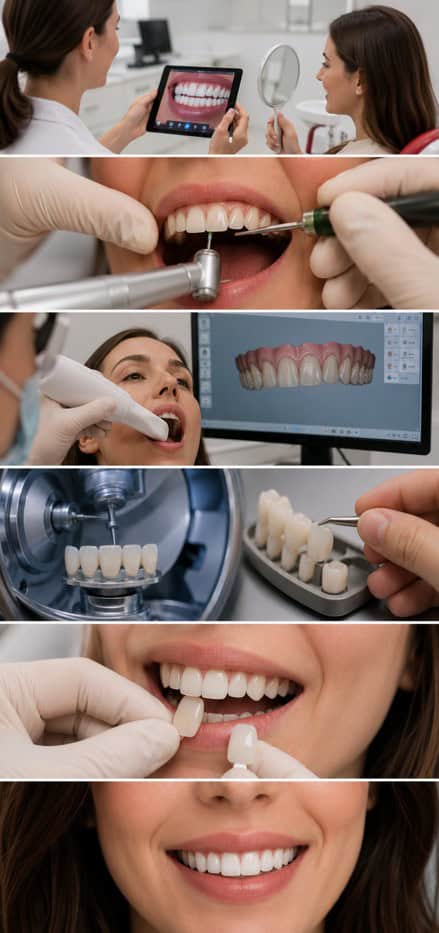
The Veneer Process at KissDent
Consultation: Clinical examination, photograph review, and honest assessment of which type of veneer is appropriate — composite, E-Max, or zirconia — and whether any preparatory treatment (whitening to establish a target shade, or gum work) should happen first.
Tooth preparation: For porcelain and zirconia veneers, a thin layer of enamel — 0.3 to 0.5mm — is removed under local anaesthetic to create space. For composite veneers, preparation is usually not needed. Temporary veneers are placed while the laboratory fabricates the finals.
Fabrication: For ceramic veneers, an intraoral optical scan captures the prepared teeth. The veneers are designed in our CAD/CAM software — reviewed by the dentist and the in-house technician together before milling begins — and milled from the selected material on-site. Most cases: two to three working days.
Bonding: Finished veneers are trial-fitted first without adhesive. Shade and shape are assessed under natural light and reviewed with you. Once confirmed, bonded permanently with dental adhesive resin. Bite checked and adjusted at the same appointment.
Digital Smile Planning
For full smile makeovers involving four or more veneers, KissDent uses digital smile planning for the shape and proportions of the result from photographs and digital measurements before any tooth preparation takes place.
In many cases a temporary mock-up is placed in your mouth so you can experience the planned outcome before committing to it. You approve the shape and proportions before a single tooth is prepared. By the time of bonding, the result holds no surprises.
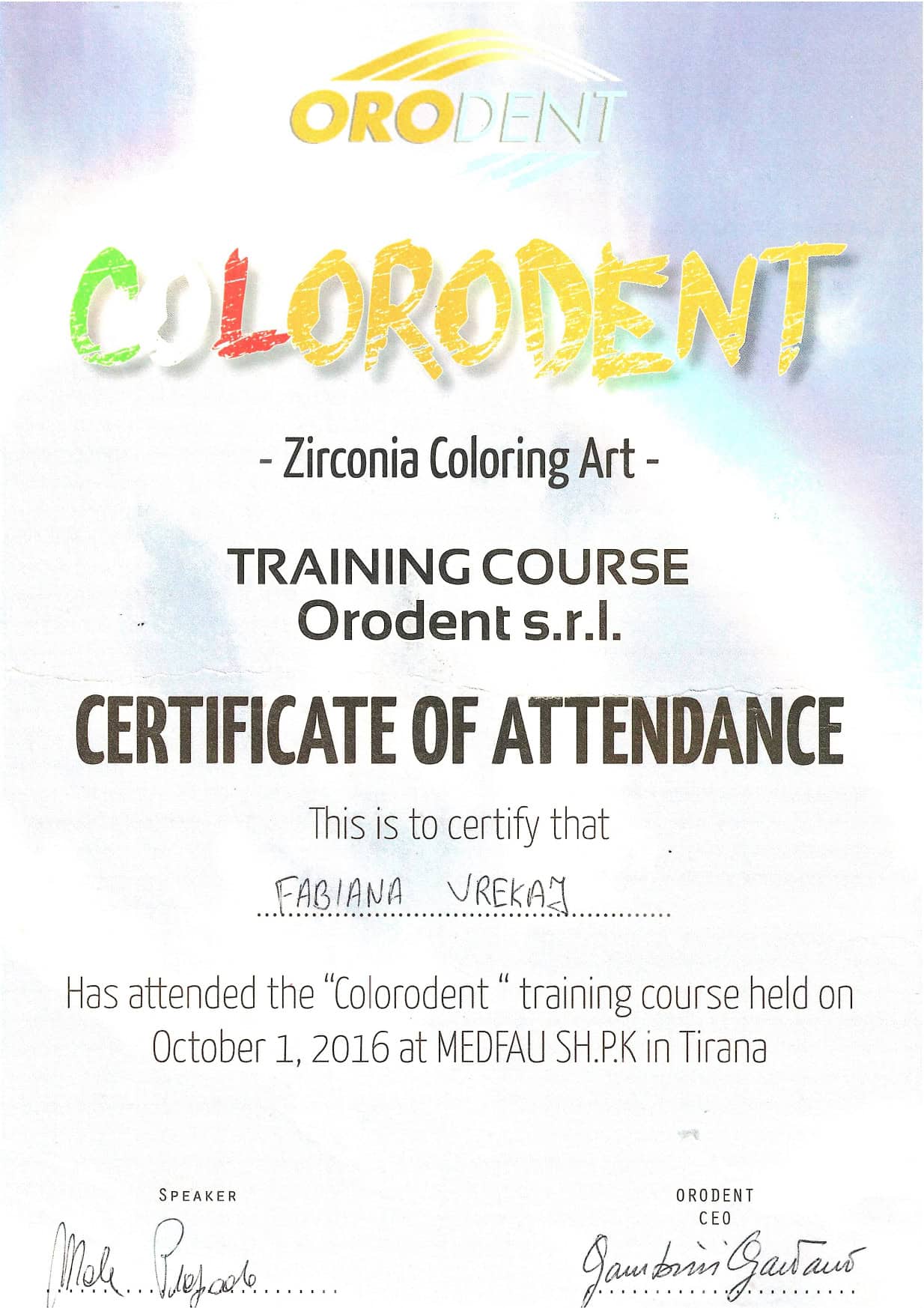
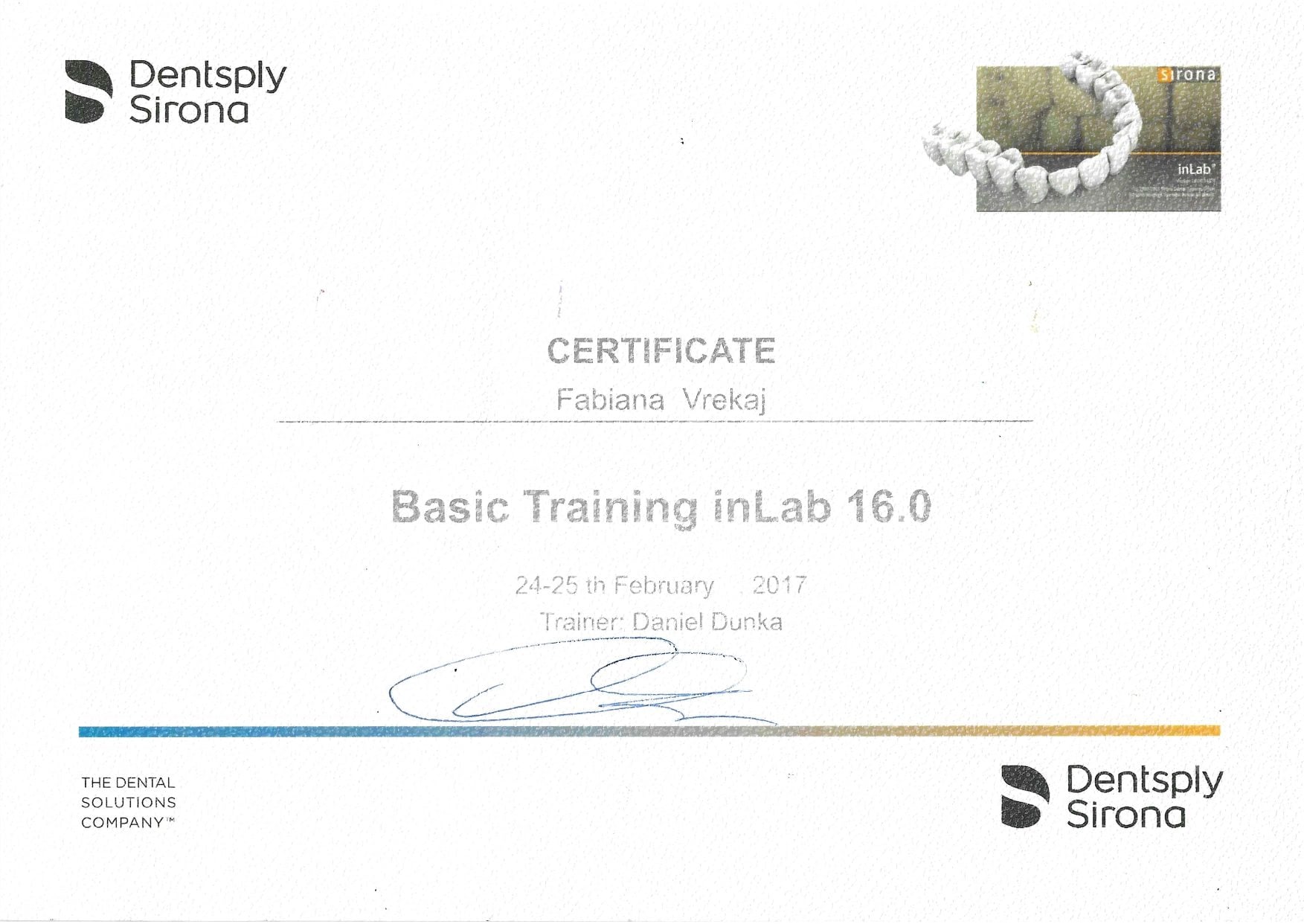
Our trusted brands:






Types of Veneers at KissDent
Composite Veneers
Composite resin veneers are applied directly to the tooth surface by the dentist in a single appointment — no laboratory fabrication required. They do not need enamel preparation in most cases, making them fully reversible, and they represent the most accessible entry point into veneer treatment.
Composite is the right choice when:
- A single tooth has a minor chip or surface imperfection
- The patient wants to trial the concept before committing to a permanent ceramic restoration
- Budget is the primary constraint and the clinical situation permits it
The limitations are real: composite veneers typically last five to seven years before requiring replacement or touch-up, and they cannot replicate the optical depth of ceramic. They also pick up surface staining from coffee, tea, and red wine more readily over time. For patients who want a result that holds up at year ten the way it looked at year one, ceramic is the better investment.
Porcelain Veneers (E-Max)
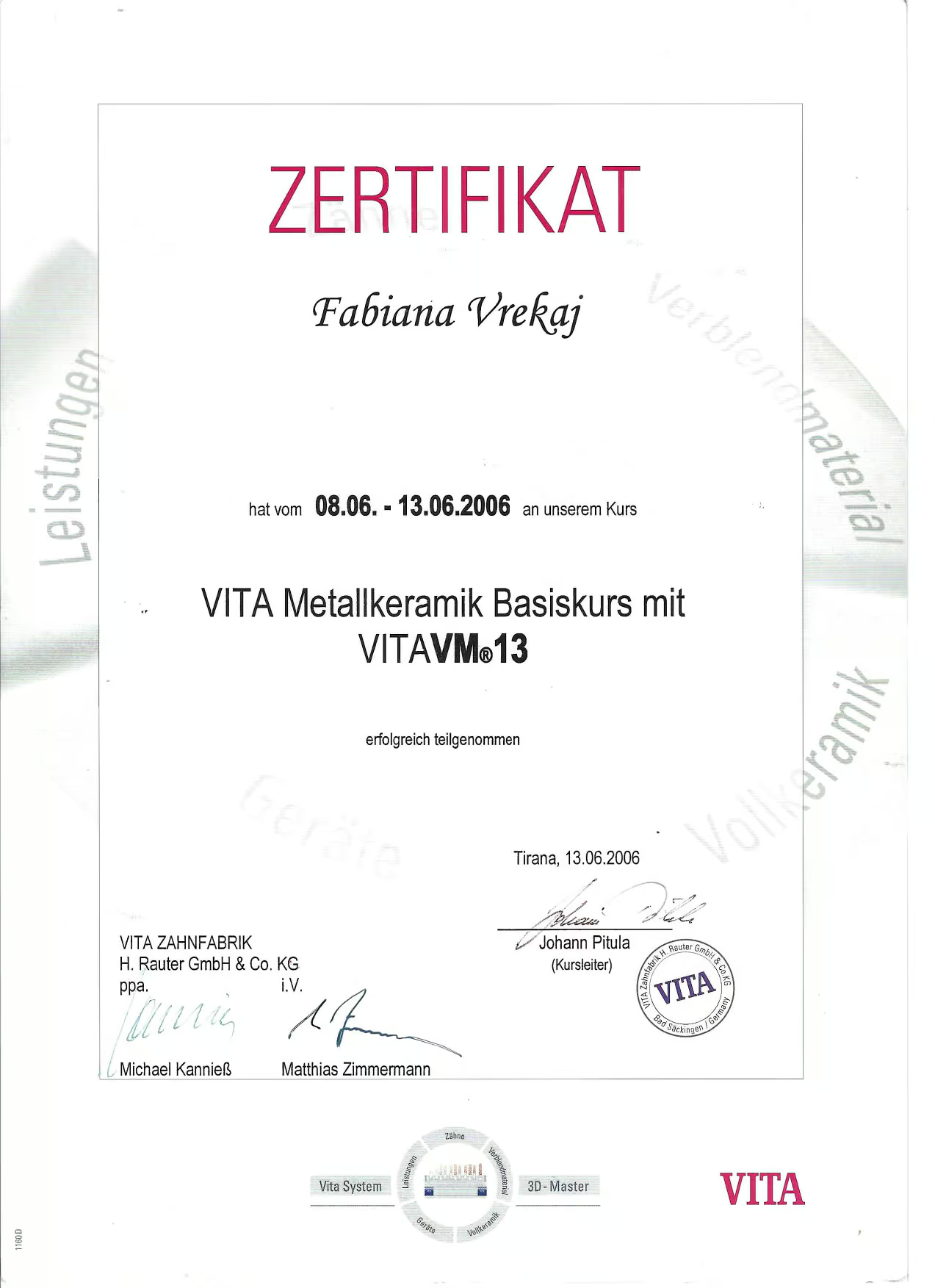
Porcelain veneers are fabricated in a laboratory from ceramic material and bonded to the tooth at a second appointment. Ivoclar Vivadent E-Max lithium disilicate is the material we use as standard — the global benchmark for dental veneer fabrication.
What sets E-Max apart is optical. It partially transmits light before reflecting it internally, in a way that closely mimics natural enamel — producing the internal depth, the translucency at the edges, the subtle shift in colour toward the gumline that makes a natural tooth look three-dimensional. No other ceramic material does this better at veneer thickness.
E-Max veneers typically last 12 to 20 years. The material does not stain or yellow — the shade at bonding is the shade that remains.
Zirconia Veneers
In specific cases — where a patient has very heavy bite forces on front teeth, or where significant coverage is needed — zirconia veneers offer greater strength than E-Max. Zirconia is harder and more fracture-resistant, though it is less translucent than E-Max and typically used when durability is the primary clinical priority. At KissDent, zirconia veneers are fabricated in our in-house laboratory using Dentsply Sirona materials.
Contact us for a free online evaluation and a personalized dental plan!
Contact Us for a Free Consultation
Contact
Message or call us and tell us what you would like to change about your smile. You can send photos, videos, or a recent X-ray so our team can better understand your case.
Consultation
Our dentists will review your details and recommend the best treatment options for you. You’ll receive a clear plan, estimated timeline, and transparent pricing before making any decision.
The Journey
Once your treatment is confirmed, we help organize your visit. From airport pickup to your first clinic appointment, our team will guide you and make everything feel easy.
Treatment
Your treatment begins with a full in-clinic examination and final smile planning. Our dentists then work carefully to create a healthy, natural-looking smile you can feel confident about.
How Long Do Veneers Last?
This depends on the material:
- Composite veneers: Five to seven years before replacement or touch-up is typical
- E-Max porcelain veneers: 12 to 20 years with proper care
- Zirconia veneers: 15 to 20 years or more
Regardless of material, the most common causes of premature veneer failure are bruxism (grinding), biting hard objects with front teeth, and neglected oral hygiene at the gum margin. If you grind, a custom night guard after placement is essential. We discuss this at the treatment planning stage.
Why Patients Choose KissDent for Veneers in Albania
Dental veneer treatment in the UK, Germany, or Italy costs significantly more than equivalent treatment at KissDent — using the same certified Ivoclar Vivadent and Dentsply Sirona materials, the same digital fabrication process, and the same European clinical standards. The difference reflects Albania’s lower operating costs, not any reduction in what is delivered.
Tirana has direct flight connections to London, Rome, Milan, Vienna, Zurich, and most major European cities. Veneer treatment at KissDent typically requires two visits:
- Visit 1: Consultation, digital smile design, tooth preparation, temporaries — two to three days
- Visit 2: Bonding of the definitive veneers — one day
Most international patients combine both into a single trip of four to five days. We can carry out a preliminary assessment from photographs before you travel..
Trusted by patients from all over the world, KissDent is committed to making every journey to a smile as comfortable, clear, and worthwhile as possible.

Sono stato ospite presso la clinica Kissdent di Tirana la scorsa settimana per effettuare degli impianti. Sono rimasto a dir poco sorpreso per la cortesia, la disponibilità, la gentilezza e la professionalità dei medici e di tutto il personale dipendente. Sono stato accolto all’aeroporto dal proprietario della clinica e dall’interprete con molta simpatia e familiarità. Prima di raggiungere la clinica avevo qualche dubbio ma, mi sono ricreduto da subito, quando ho assaporato la tendenza positiva che anima gli operatori (tutti, nessuno escluso). Ho trovato due dottoresse molto pazienti che mi hanno fatto sentire a mio agio e mi hanno ben consigliato sui lavori da eseguire. L’interprete straordinaria, non mi ha mai abbandonato (in caso di difficoltà durante il soggiorno potevo raggiungerla telefonicamente ricevendo sempre grande disponibilità e competenza). Mi sono trovato davvero molto bene. Tornerò volentieri a Gennaio per continuare le cure col piacere di incontrare ciascuno/a di loro.
Siamo stati in questa clinica x fare gli impianti, appena arrivati avevamo molti dubbi e ansia non conoscendo nessuno non sapevamo a chi ci stessimo affidando, poi tutto è svanito appena abbiamo conosciuto Berti, Vera, Alba, Renata e il resto dello staff tutti molto gentili disponibili e professionali, non credevamo che in meno di una settimana avremmo fatto metà del lavoro quando in Italia ci sarebbero voluti anni. Siamo rimasti molto contenti per il lavoro svolto, ritorneremo tra pochi mesi per completare il lavoro. Grazie infinitamente
Compliments to the entire team. Very professional, respect your time and plan around your need. They pick you up from the airport and drop you off as well. Came here with my family and my dad decide to do some treatment as well. In 4 days between me and my dad we have done 7 implants. Doctor is so sweet and you wont feel any pain at all. Same goes for extraction and fillings. The whole team is amazing. Located in the heart of the city of Tirana, very clean and like I said NO PAIN AT ALL. Thanks again everyone. See you soon
I went to Kissdent to see about old crowns (30 years old) and recent work that I had done in the EU that I was not happy with. With a panoramic xray (and visual aesthetic check) it was clear what needed to be done.
Fast-forward 2 weeks and I write now, with 9 beautiful new zirconium crowns. They are mostly back molars but one that I worried about most was my left front tooth. I have a difficult tooth colour to match.
Kissdent staff have done a wonderful job. The clinic and lab are located on the same premises so they are able to adjust the tooth colour and overall bite precisely.
All excellent quality work and material for a very reasonable price. Unbeatable in Europe and North America.
Kissdent clinic is pristine in terms of cleanliness, ambient and warm in atmosphere….but the best is the staff and the relief you feel knowing that you are in good hands. They are very professional and communicative (in english and several other languages). They take the time and do not rush you through.
They can do any form of dentistry…from cosmetics to implants and orthodontics but they do not try to sell you more services than you need. They respect strong and healthy teeth.
Thank you all very much for your great service and for my new smile!!!
Ich bin zum dritten Mal in der Praxis Kiss Dent. Ich bin absolut begeistert!
Ich hab ein Implantat am Frontzahn bekommen. Das war vor einem halben Jahr, die Behandlung war sehr sanft, sehr einfühlsam und ist fantastisch verheilt. Es hat nicht einen Moment wehgetan und ich hab mich jederzeit gut aufgehoben gefühlt.
Die Praxis ist top ausgestattet und die Mitarbeiterin sind alle sehr nett. Die Termine sind pünktlich, es gibt keine Wartezeit und die Arbeit ist absolut akkurat.
Jetzt hat man mir im dortigen Labor zwei Kronen angefertigt, die absolut natürlich und passgenau gearbeitet sind. Wirklich fantastische Arbeit. Die größte Herausforderung, Kronen im Frontbereich, haben die Ärztin und das angeschlossene Labor zu meiner vollsten Begeisterung gemeistert!
Ich kann diese Klinik nur allen sehr ans Herz legen.
Die Reise lohnt sich und ich komme auf jeden Fall wieder.
Get Your 100% Free Personalized Dental Quote
Receive a free personalized quote and discover the best treatment options for your smile. Speak directly with a dentist in Albania! Our specialists at KissDent will provide a free assessment based on your panoramic X-ray and individual dental needs.
Frequently Asked Questions
No. Veneers are available in composite resin, E-Max porcelain, and zirconia. The right material depends on the clinical situation, the tooth position, bite forces, and what the patient wants to achieve. At KissDent we assess each case and recommend the material that fits — not a standard offering for every patient.
Composite veneers require no preparation and no anaesthetic. Porcelain and zirconia veneer preparation is done under local anaesthetic — not painful. Some sensitivity on the prepared teeth while temporaries are in place is normal and resolves once the finals are bonded.
Yes, with properly designed and calibrated ceramic veneers. The concern about an artificial result — uniformly bright, opaque teeth — comes from poor shade calibration or incorrect material choice. At KissDent, shade, translucency, and surface texture are treated as clinical requirements, not aesthetic preferences.
Yes. Veneers function like natural teeth for all normal eating. Avoid biting into very hard foods with your front teeth — the same care you would take with natural teeth.
Yes — and for ceramic veneers, we often recommend it. Whitening first establishes your target shade; the veneers are matched to this. The sequence always matters: whiten first, then fabricate the veneers to match.
Some patients need one veneer for a single chip. Others want a full smile transformation covering six, eight, or ten teeth. We design the minimum number needed to achieve a balanced, natural result — which is not always the same as what the patient initially assumes.
The digital smile design and provisional mock-up process exist specifically to prevent this. You approve the planned outcome in your mouth before preparation takes place and before final veneers are made.
Yes, at a properly credentialled clinic. KissDent uses certified Ivoclar Vivadent and Dentsply Sirona materials, fabricates all restorations in our own in-house CAD/CAM laboratory, and has operated to European clinical standards since 1976 under the clinical direction of Dr. Veronika Gjata.